 comparison
Steel Frame vs Timber Frame Homes: 2026 Comparison
Table of Contents
- Steel Frame vs Timber Frame Homes: A Quick Comparison
- Bushfire Resistance of Steel Frames and the Benefits of Steel Frame Construction
- Modular Home Construction Timeframes and Choosing the Right Frame
- Frequently Asked Questions
Last Updated: September 26, 2026
Steel Frame vs Timber Frame Homes: A Quick Comparison
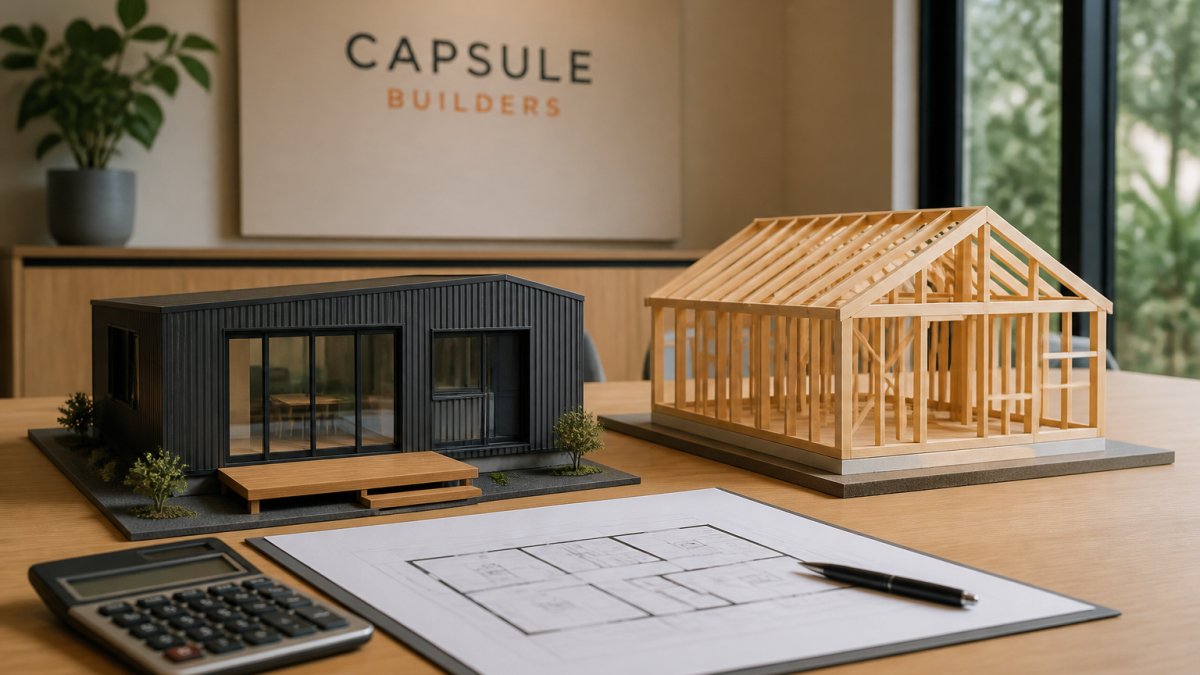
Steel frame vs timber frame homes shapes everything downstream: bushfire compliance, build speed, and long-term maintenance. At Capsule Builders, we specialise in custom modular builds.
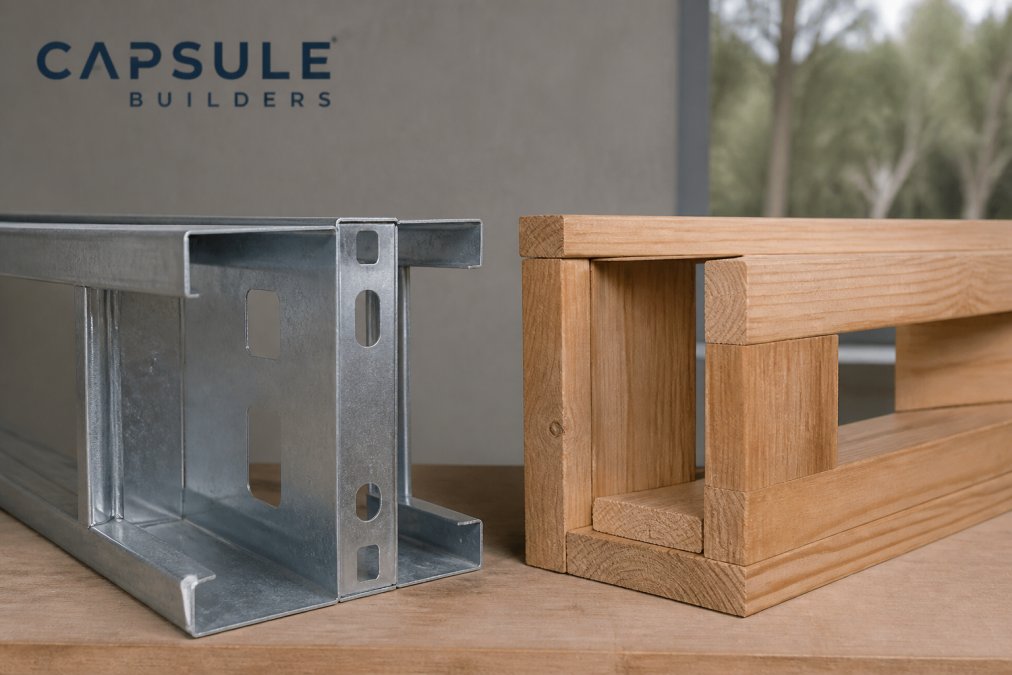
Steel frame construction uses galvanised light gauge steel, roll-formed into precise profiles: it does not absorb moisture, feed termites, or burn. Timber frame uses engineered wood or sawn timber, renewable and familiar to most trades.
| Factor | Steel Frame | Timber Frame |
|---|---|---|
| Bushfire resistance | Non-combustible | Requires treatment |
| Termite resistance | Inherent | Needs protection |
| Dimensional stability | No warp or shrinkage | Can move with moisture |
| Moisture and rot | Corrosion-resistant when galvanised | Susceptible if wet |
| Erection speed | Fast, pre-fabricated | Slower on site |
| Thermal bridging | Higher, needs breaks | Lower naturally |
| Weight | Lighter per member | Heavier |
| Cost per square metre | Competitive at scale | Varies with supply |
An experienced modular builder will tell you the same thing: for bushfire-prone blocks, steel wins on compliance alone. For sheltered sites, timber remains a fair option.
Bushfire Resistance of Steel Frames and the Benefits of Steel Frame Construction
Steel frames do not burn, making them a strong choice where bushfire attack levels are high. Because steel is non-combustible, it removes one fuel source from the building envelope entirely.
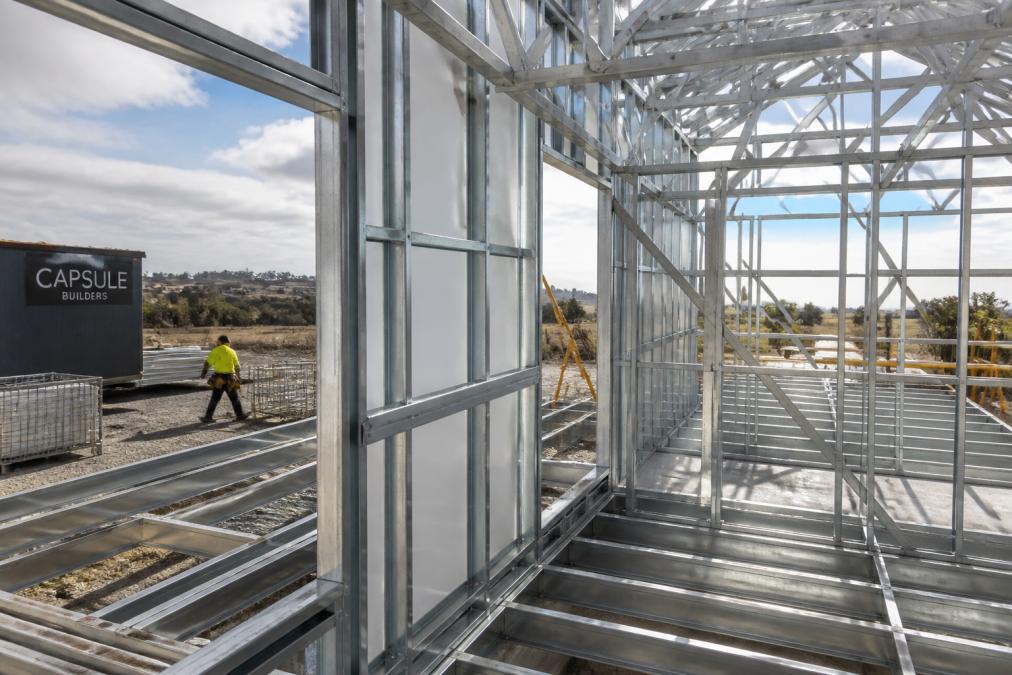
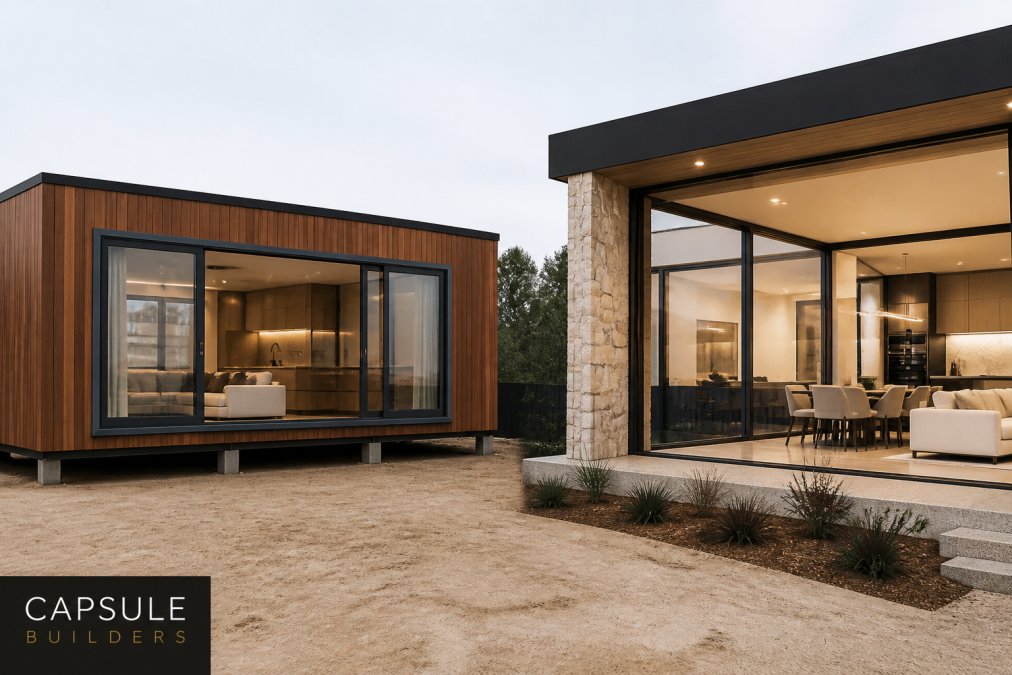
The benefits of steel frame construction go beyond fire. Galvanised steel resists termites, holds its shape, and handles structural movement better than timber. You can build anything modular with steel, from a compact studio to a full family home.
Timber can meet those standards, but usually with chemical treatment and ongoing inspection. Steel sidesteps that lifecycle cost.
Modular Home Construction Timeframes and Choosing the Right Frame
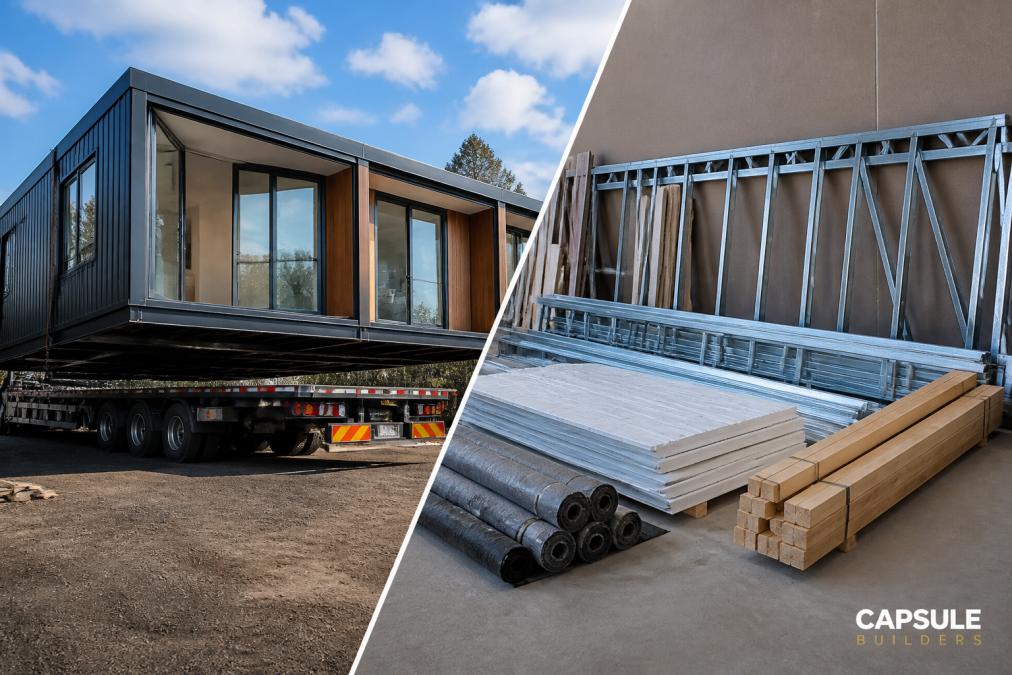
Modular home construction timeframes are shorter because modules are built off site while site works and permits run in parallel. Steel's light weight and pre-fabricated accuracy speed up erection.
Frame choice affects that timeline directly. Steel arrives pre-engineered, so there is less on-site cutting and waste; timber often needs more on-site adjustment, adding days.
The right frame depends on your block. Bushfire zones, coastal corrosion exposure, and termite risk all favour steel. Capsule Builders designs each home around your land, with a 7-star minimum design target and solar and battery-ready options. As a complete modular builder including installation, we can take the project from frame selection through to handover, so you are not left coordinating separate trades.
Frequently Asked Questions
What are the downsides of steel framed homes?
Steel frames conduct heat more readily than timber, so thermal bridging must be managed with insulation to maintain energy efficiency. They also require corrosion protection in coastal areas, though modern galvanised steel handles this well. Steel is not a DIY-friendly material for renovations because it needs specialist trades for modifications. Finally, some buyers unfamiliar with steel framing may have concerns about resale, though lender acceptance is generally strong when the home meets building code compliance.
How does the construction speed differ between steel and timber frames?
Steel frames are precision-engineered off-site, so they arrive ready to assemble without on-site cutting or adjustments. This can reduce framing time compared to timber, which may warp or shrink and require additional fitting. With modular home construction timeframes, steel framing allows fabrication to run in parallel with site preparation and permit approvals. The result is earlier lock-up, faster handover, and reduced exposure to weather delays during the build.
Does a steel frame affect the resale value of a house?
A steel frame does not inherently lower resale value. Lenders and insurers accept steel-framed homes that meet building code compliance, and buyers increasingly value the termite resistance, dimensional stability, and low maintenance of steel. In bushfire-prone areas, the non-combustible nature of steel can be a selling point. Resale value depends more on location, design quality, and energy efficiency than on frame material alone.
Choosing a frame is really a choice about risk, speed, and long-term upkeep. Steel removes termite and fire exposure, holds its dimensions, and suits off-site precision building. Capsule Builders specialises in custom modular builds, so you can build anything modular with a steel frame tailored to your block. Get started with Capsule Builders and design your concept in real time.