 comparison
Modular vs Traditional Home Build Costs: 2026 Guide
Table of Contents
- Modular vs Traditional Home Build Costs in 2026: The Full Picture
- Site Preparation Costs for Modular Homes vs Traditional Builds
- Modular Home Construction Timeline vs Traditional Builds
- Fixed Price vs Variable Cost Contracts
- Investment Potential and Resale Value
- Site Access and Logistical Challenges
- Customisation and Design Flexibility
- Post-Build Maintenance, Insurance and Warranty
- Council Approval and Regulatory Costs
- Frequently Asked Questions
Last Updated: October 3, 2026
Modular vs Traditional Home Build Costs in 2026: The Full Picture
Modular vs traditional home build costs in 2026 comes down to where the money goes. At Capsule Builders, we specialise in custom modular builds, and site preparation, council approval and contract structure separate a controlled budget from a runaway one.
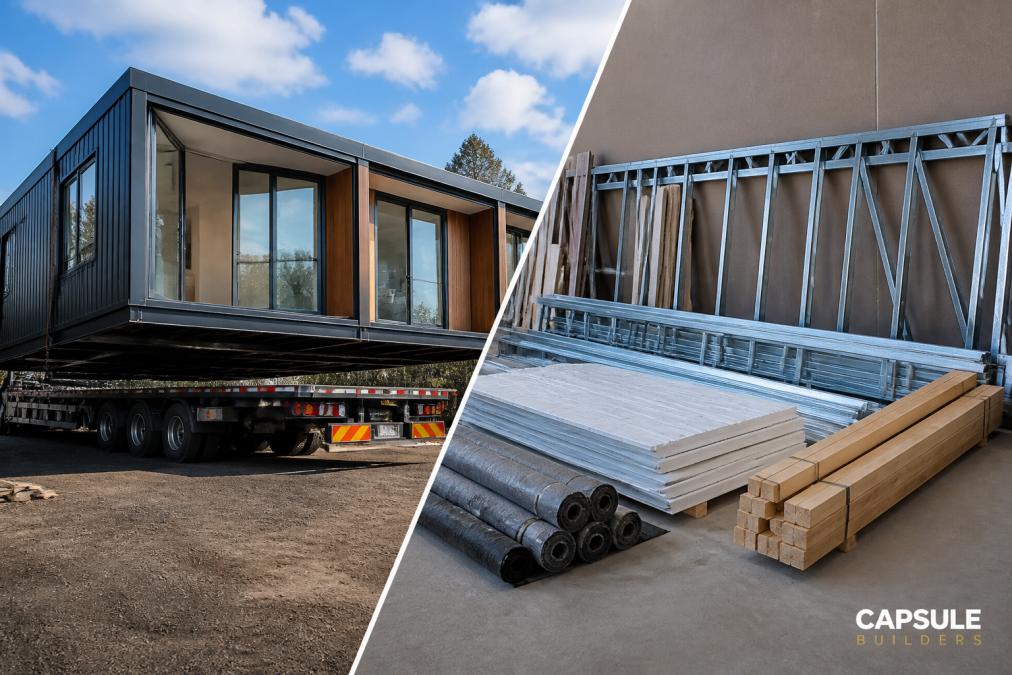
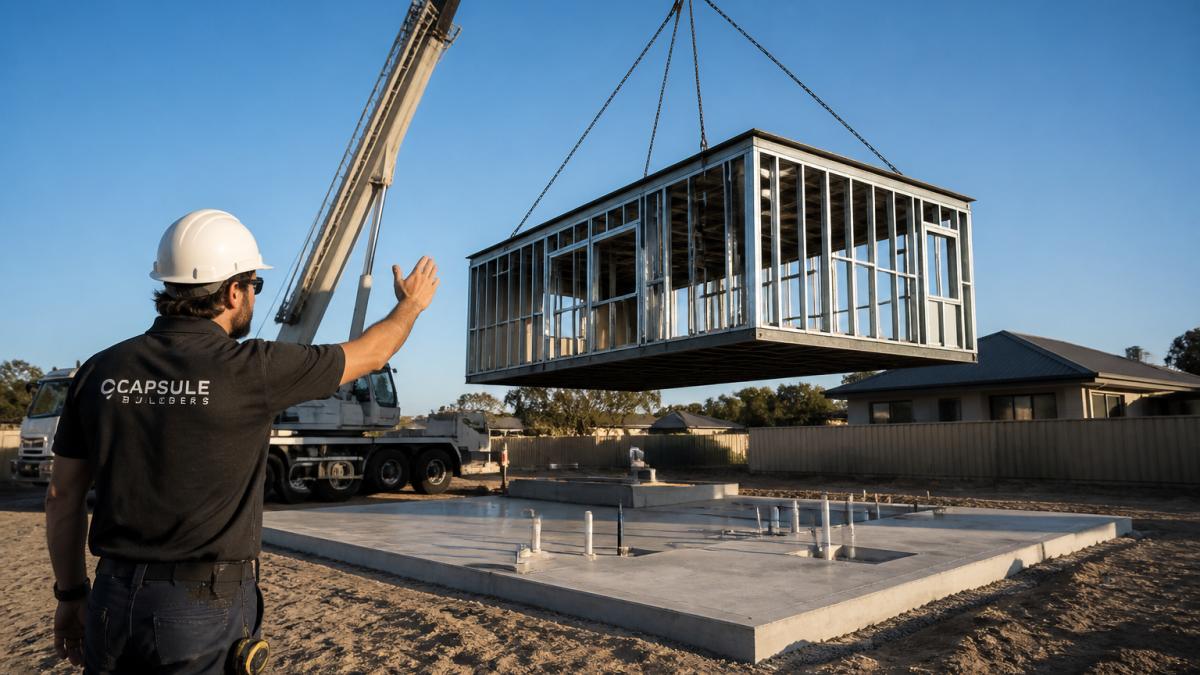
A modular home is built in structurally independent modules in a factory, then transported and assembled on site, repeatable and weather-protected, unlike site work.
| Cost Area | Modular Build | Traditional Build |
|---|---|---|
| Base price | Includes factory fit-out | Structure only, often |
| Site preparation | Still required, often heavier | Required, staged |
| Build timeline | Shorter on site | Longer, weather-exposed |
Site Preparation Costs for Modular Homes vs Traditional Builds
Site preparation costs for modular homes are not automatically lower than traditional builds, both need a foundation, services and access, while modular delivery adds crane access and a level pad on a fixed date. Sloping blocks, restricted street access or reactive clay soil add cost regardless of method, so get a geotechnical assessment and site access review before you sign anything.
Modular Home Construction Timeline vs Traditional Builds
A modular home construction timeline vs traditional builds is shorter because fabrication and site works run in parallel, while traditional builds do this sequentially and weather delays hit harder. Speed reduces on-site labour hours, financing costs and downtime, where the real savings sit, though late design changes are harder once modules are in production.
| Stage | Modular | Traditional |
|---|---|---|
| Design and approvals | Runs alongside fabrication | Runs before site works |
| Foundation and site works | Must finish before delivery | Staged over the build |
| Weather exposure | Minimal | High |
Fixed Price vs Variable Cost Contracts
Fixed-price contracts are the biggest cost-control lever in a modular build, since off-site fabrication reduces exposure to weather and on-site labour variation, while traditional builds lean toward variable contracts. Variations after fabrication begins, or unforeseen ground conditions, still carry cost, but as disclosed line items, not open-ended risk.
Investment Potential and Resale Value
Resale value for a modular home depends on location, build quality, compliance and appeal, lenders and buyers assess the finished home, not the method. Energy efficiency is increasingly part of that assessment, and a 7-star minimum target with solar and battery-ready options can carry lower running costs.
Site Access and Logistical Challenges
Logistics and transportation are modular-specific line items, oversized load permits, escort vehicles and route planning, and site access determines how the crane positions each module. A site access review before design lock-in lets an experienced modular builder flag issues early, and logistics costs scale with module size and distance, not floor area.
Customisation and Design Flexibility
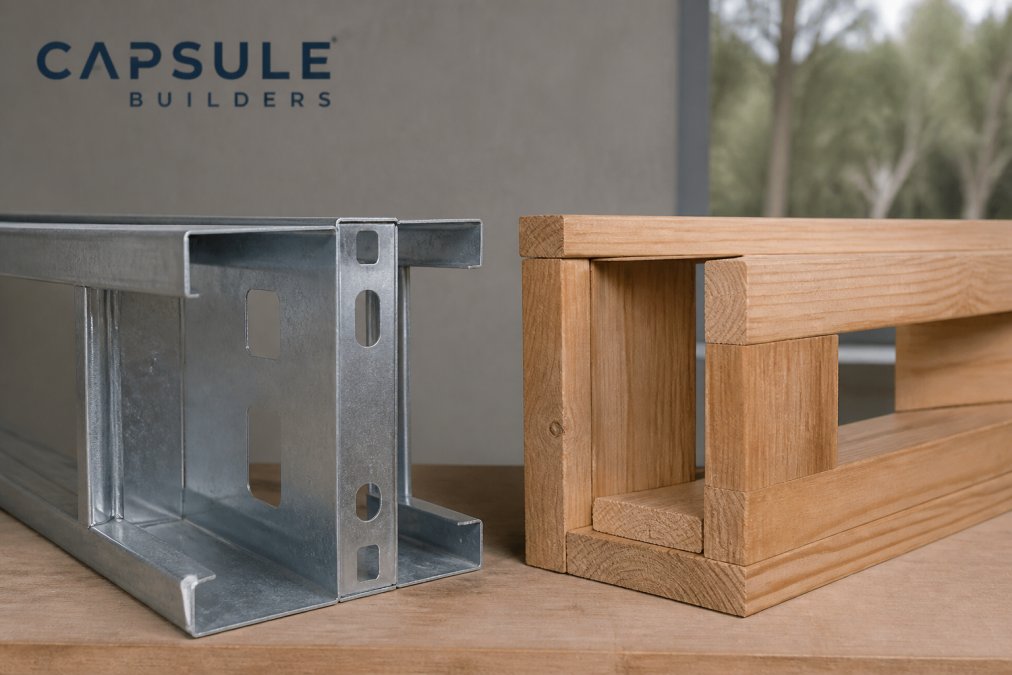
The old assumption that modular means a fixed catalogue is outdated, steel-framed modules can be configured around your land, orientation and lifestyle, then assembled on site. Customisation is easiest before fabrication and hardest after, and our Capsule Studio™ lets you design and manage your budget in real time.
Post-Build Maintenance, Insurance and Warranty
Modular homes have specific maintenance items, module join lines, cladding transitions and service connections, that need periodic inspection. Confirm what your builder's warranty covers, how long it runs, and who handles defects after handover, a builder still around to honour it is worth more than a slightly lower quote.
Council Approval and Regulatory Costs
Council approval costs vary by local government and block. What matters is sequencing: approvals and fabrication can run in parallel, which is how modular builds save time without cutting corners. Check your council's requirements for setback, R-Code compliance and bushfire or flood overlays before you commit.
Frequently Asked Questions
What are the primary cost drivers when comparing modular and traditional builds in 2026?
The biggest cost drivers are site preparation, foundation type, and contract structure. Modular builds shift much of the work to a factory, which reduces on-site labour and weather delays, while traditional stick-built homes carry more subcontractor and material variability. In both cases, site access, council approval timelines, and whether you sign a fixed-price contract will shape your final figure more than the base build rate itself.
How do site preparation costs differ between modular and traditional construction?
Site preparation costs for modular homes often include crane access, a level pad, and a foundation designed for on-site assembly, while traditional builds need scaffolding, longer site establishment, and more trades on site over many months. Difficult blocks with slope or tight access can push either method higher, so a geotechnical assessment and access review before you commit to a design is the best way to avoid surprises.
Do modular homes offer better value for money than traditional stick-built homes?
Value depends on your priorities. Modular construction can reduce build time and labour costs through off-site construction, and parallel processing of building permits and fabrication can bring earlier handover. Traditional builds may suit heavily customised designs on complex sites. For a fair comparison, ask for a fixed-price contract that lists every inclusion, then weigh the build timeline, energy efficiency, and post-build maintenance costs, not just the headline square metre rate.