 comparison
Is Modular Construction Good for Luxury Homes?
Table of Contents
- Modular Homes vs Traditional Homes Quality: What Actually Differs
- Bespoke Modular Home Designs for Luxury Living
- Benefits of Steel-Framed Modular Homes for Luxury Builds
- Site Preparation, Logistics and What Actually Delays a Modular Build
- Financing, Insurance and Resale: The Questions Buyers Actually Ask
- Maintenance and Long-Term Durability
- What Luxury Buyers Should Ask Before Committing
- Frequently Asked Questions
Last Updated: September 20, 2026
Modular Homes vs Traditional Homes Quality: What Actually Differs
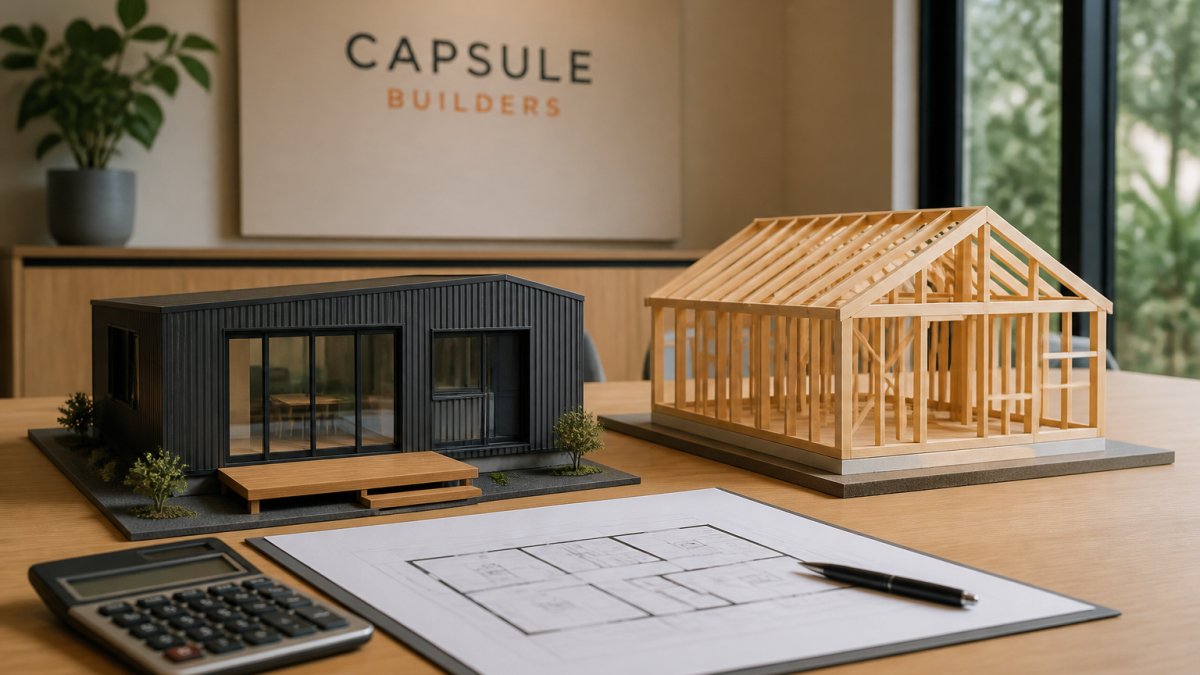
Quality depends more on the builder's process than where the home is built. Steel-framed modular construction moves most work into a controlled environment, keeping frames straight and weather out of the fit-out, while traditional site-built homes offer total design freedom but expose the structure to the elements.
Modular pulls ahead on consistency, but can fall behind on bespoke details decided late, because the factory needs certainty earlier than a site crew does.
| Factor | Modular (Steel-Framed) | Traditional Site-Built |
|---|---|---|
| Build environment | Controlled factory | Open site, weather-exposed |
| Typical programme | Compressed, parallel | Sequential, weather-dependent |
| Quality consistency | High, repeatable | Varies by trade and season |
| Design freedom | High within module limits | Effectively unlimited |
| Site disruption | Minimal, short installation window | Sustained over many months |
| Cost certainty | Stronger at contract stage | More exposed to variations |
Bespoke Modular Home Designs for Luxury Living
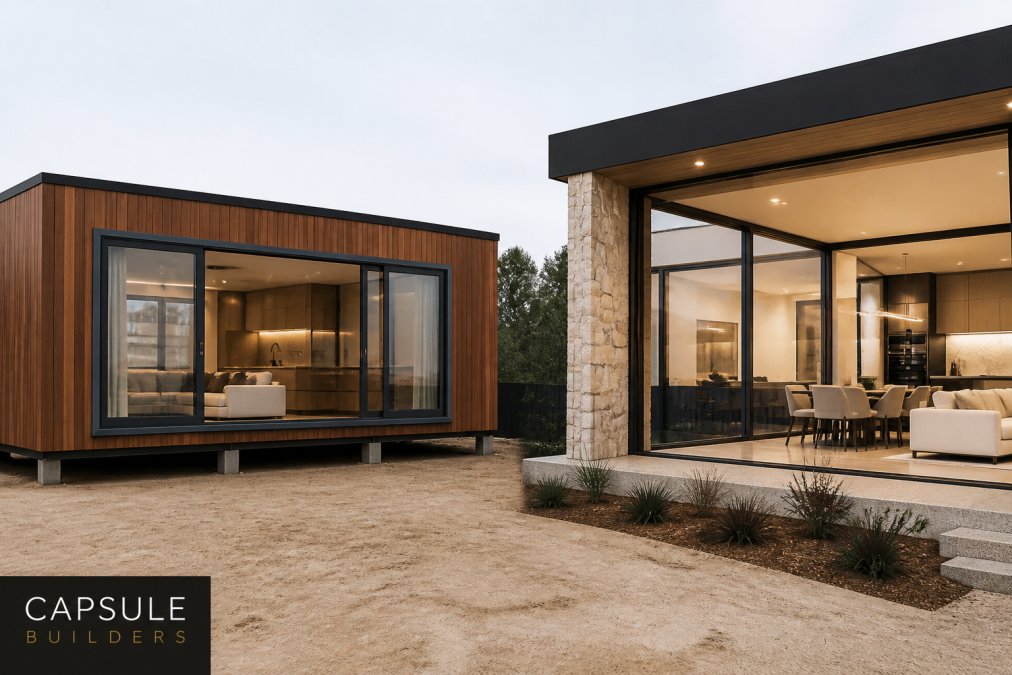
Luxury in a modular home is not a contradiction. An experienced modular builder can deliver raked ceilings, full-height glazing, stone benchtops, integrated joinery and seamless indoor-outdoor flow, because the modules are the delivery method, not the design language.
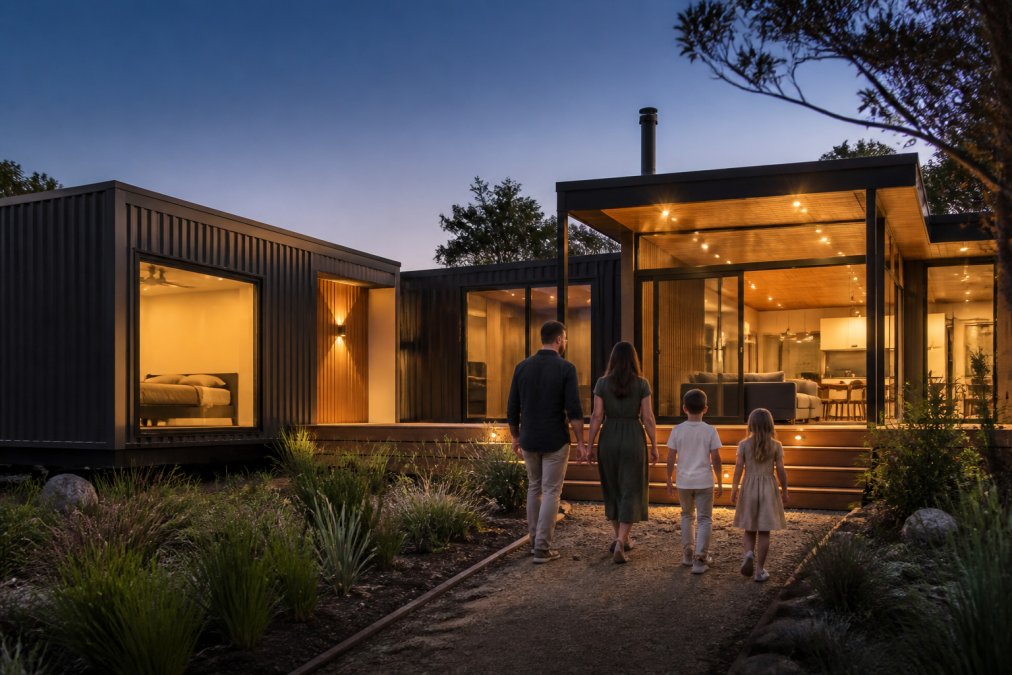
The real limits are rarely aesthetic, they are about transport. Module width is capped by road regulations and length by your access route, so a tight driveway, low bridge or steep gradient must shape the design early. Finishes also lock earlier because the module is closed up in the factory.
Custom modular builds work best when the design brief is settled early and site constraints are documented properly.
Benefits of Steel-Framed Modular Homes for Luxury Builds
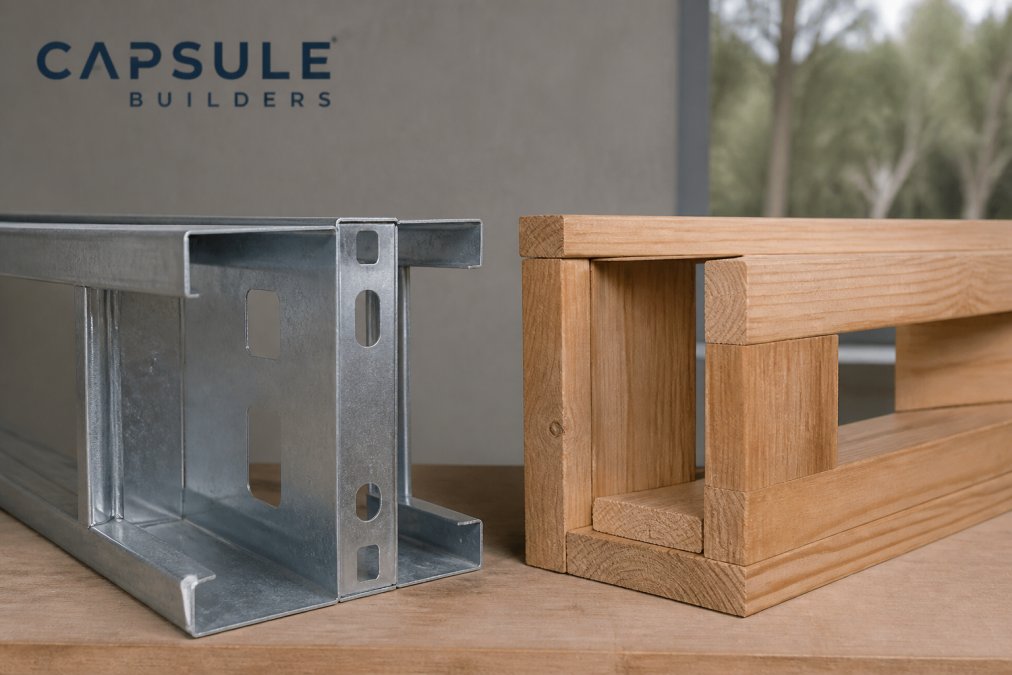
Steel framing is where modular construction earns its place in the high-end market. Steel does not warp, does not host termites, and holds its dimensions through humidity swings that would move timber, for flush joinery lines and large openings, that stability is the whole game.
National Construction Code sets the performance requirements all new homes must meet, and steel-framed systems meet them comfortably when engineered correctly. Energy efficiency is easier too, because a steel frame allows deeper insulation cavities and tighter building envelopes without adding bulk.
Steel also survives the road journey and crane lift without twisting. The trade-off: higher upfront cost than timber, and not every trade is equally familiar with it. The payoff is durability, straighter walls and fewer callbacks.
Site Preparation, Logistics and What Actually Delays a Modular Build
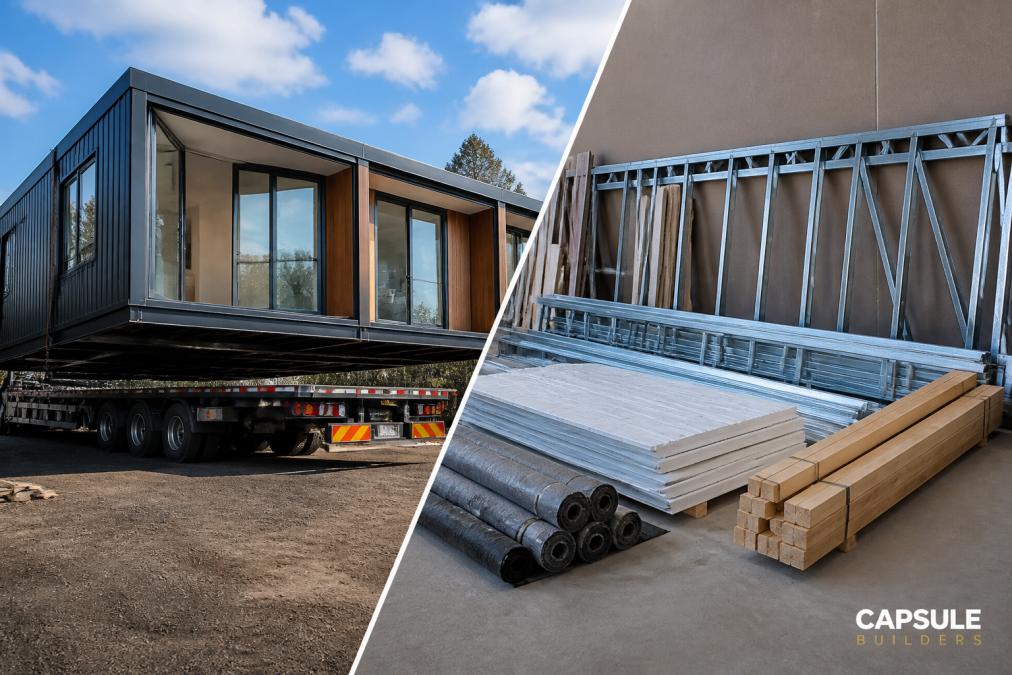
Most modular delays trace back to the site, not the factory. While modules are fabricated, the block still needs levels cut, footings poured, services trenched and crane access confirmed, running these in parallel is why modular timelines are shorter.
Logistics is underestimated: a crane needs a clear swing zone and firm ground, a truck needs clearance and turning radius, and on a sloping block or narrow street that planning starts months before delivery day.
Safe Work Australia guidance on crane and lifting operations is worth reading if you want to understand what your builder is managing on installation day. It is not glamorous, but it is where projects are won or lost.
Financing, Insurance and Resale: The Questions Buyers Actually Ask
Lenders and insurers treat modular homes like any other dwelling, provided the home is fixed to permanent footings and holds the required approvals. Progress payment structures do differ, because much of the work happens off-site, so ask your lender early how they handle staged payments for off-site fabrication.
Maintenance and Long-Term Durability
Steel-framed modular homes are low maintenance by design, but low is not zero. The frame needs almost nothing; what ages is the same as on any home, roof coverings, cladding, sealants, gutters and drainage.
What Luxury Buyers Should Ask Before Committing
Ask about what is hard to change later: who engineers the modules and to what standard, the factory inspection schedule, how module joints are sealed and waterproofed, and what happens if a module is damaged in transit. Then ask how early finishes must be locked, the contingency plan if site access fails on delivery day, and who holds responsibility for defects after handover.
Frequently Asked Questions
How does the quality of modular construction compare to traditional site-built homes?
Factory-controlled conditions allow tighter tolerances, consistent weather protection and repeatable quality checks that are harder to maintain on an exposed site. Steel-framed modules are engineered for structural integrity and transported as complete units, so finishes arrive intact. An experienced modular builder can match or exceed site-built standards, especially when the same trades and high-end fittings are used in both methods.
Can modular homes be considered luxury properties?
Yes. Luxury is defined by design, materials and finish, not by where the walls are assembled. Bespoke modular home designs can include architectural aesthetics, high-end fittings, smart home integration and custom floor plans. Off-site fabrication simply moves the build into a controlled environment, which supports precision engineering and consistent results for high-end homes.
Do modular homes appreciate in value like traditional homes?
Resale value depends on location, land value, build quality and compliance rather than the construction method alone. A modular home that meets building standards, uses quality materials and suits its site can perform similarly to a comparable site-built home. Buyers and lenders increasingly accept factory-built homes, though it helps to confirm finance and insurance requirements early in the process.