 comparison
Prefab vs Modular Home Quality Differences
Table of Contents
- Prefab vs Modular: Quality Differences That Decide Your Build
- Energy Efficiency of Modular Homes and Steel-Framed Benefits
- Modular Home Building Process Timeline vs Prefab Delivery
- Frequently Asked Questions
Last Updated: September 12, 2026
Prefab vs Modular: Quality Differences That Decide Your Build
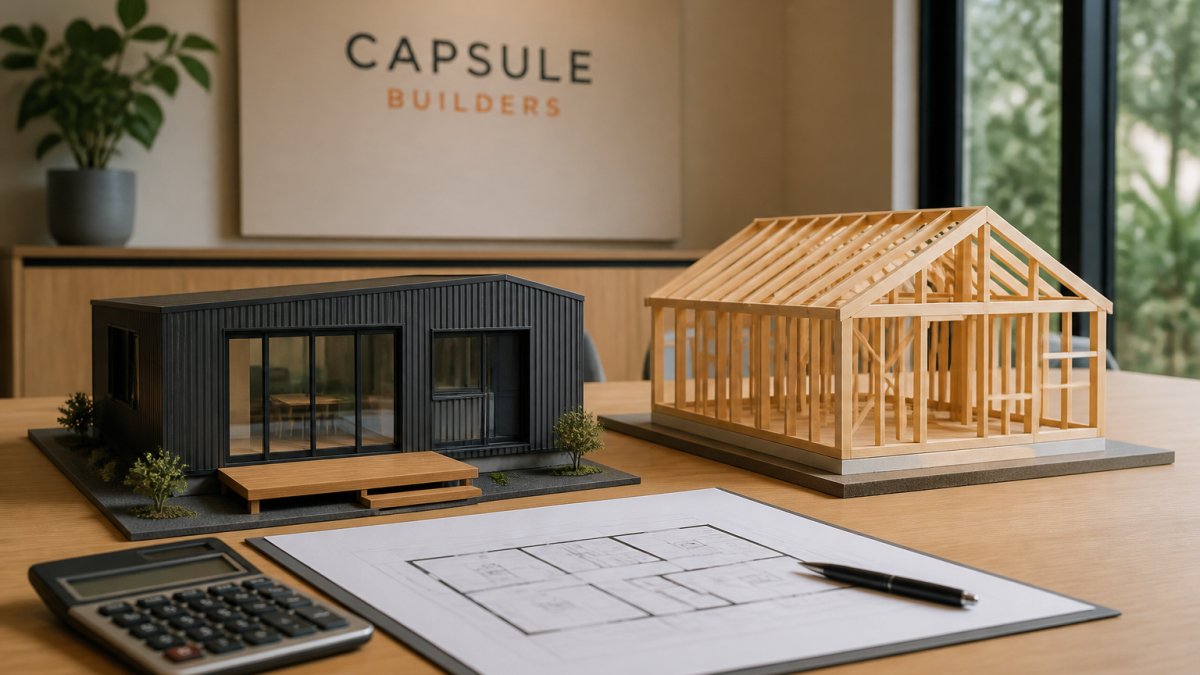
The prefab vs modular home quality differences come down to how much of the build happens under factory control. Prefab covers any structure with components made off-site; modular delivers complete three-dimensional modules built to full building code, craned onto a permanent foundation. As an experienced modular builder, we see where that distinction changes what you get.
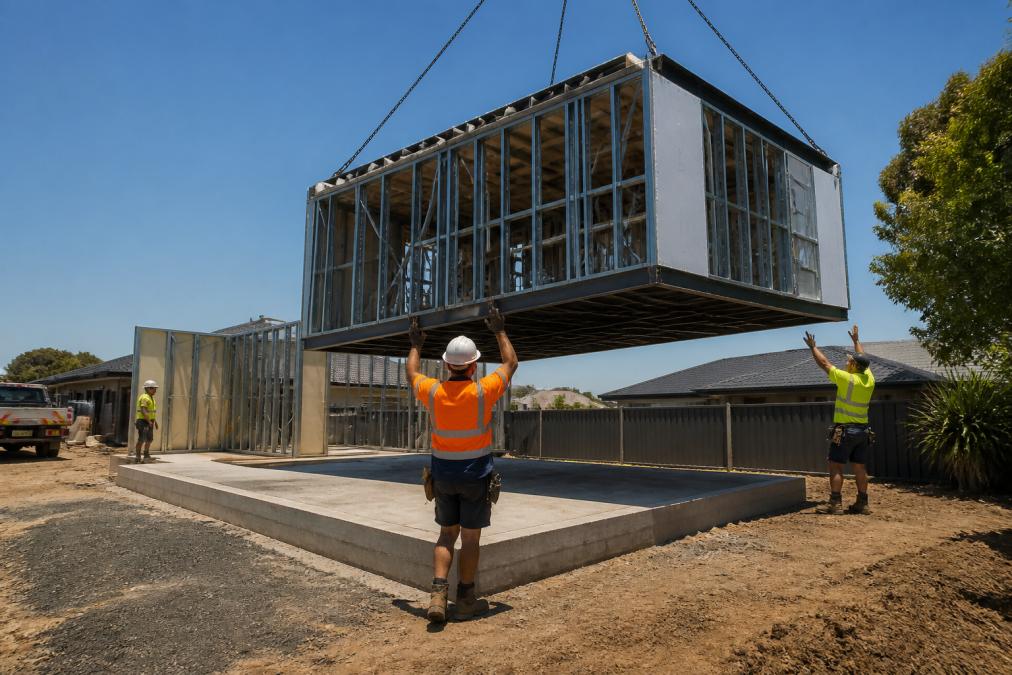
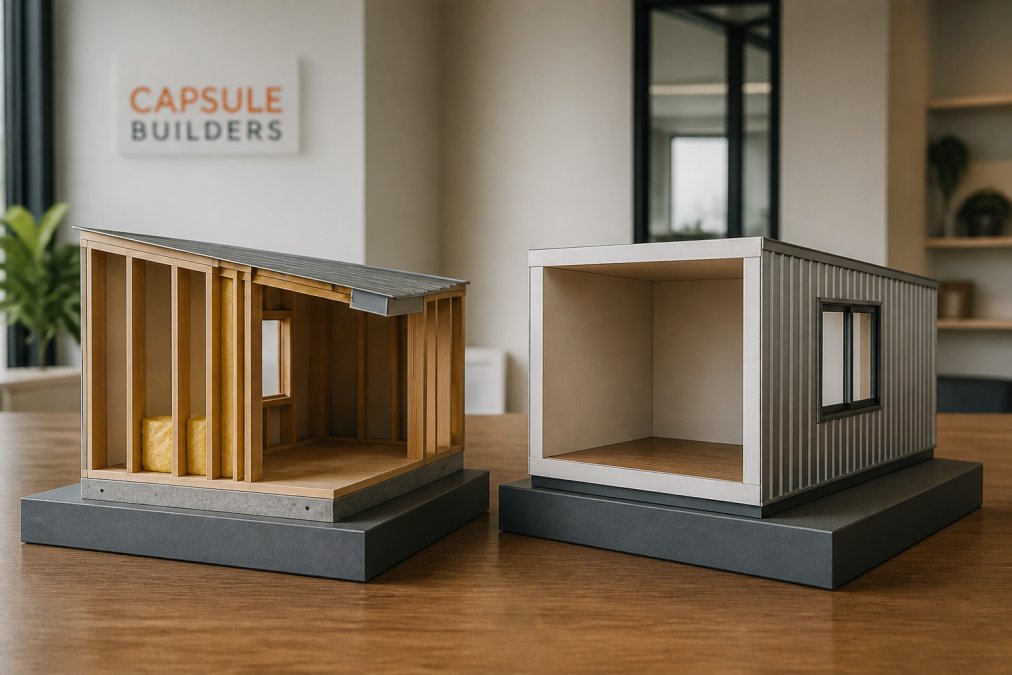
Prefab is a broad category; modular is its strictest version. A prefab kit arrives as panels you assemble on site; a modular home arrives as a finished room, wiring, plumbing, insulation and linings already in.
| Factor | Prefab (panels, kits) | Modular (volumetric) | Why it matters |
|---|---|---|---|
| What arrives | Flat panels, frames, components | Finished 3D modules | Modular needs less on-site labour |
| Site assembly time | Longer, weather-exposed | Days, not months | Faster handover |
| Quality control | Split between factory and site | Concentrated in factory | Fewer site defects |
If your block has tight access, a panelised prefab may be the only thing that reaches the back yard. If it's accessible and you want a finished home sooner, modular wins on almost every quality measure.
Energy Efficiency of Modular Homes and Steel-Framed Benefits
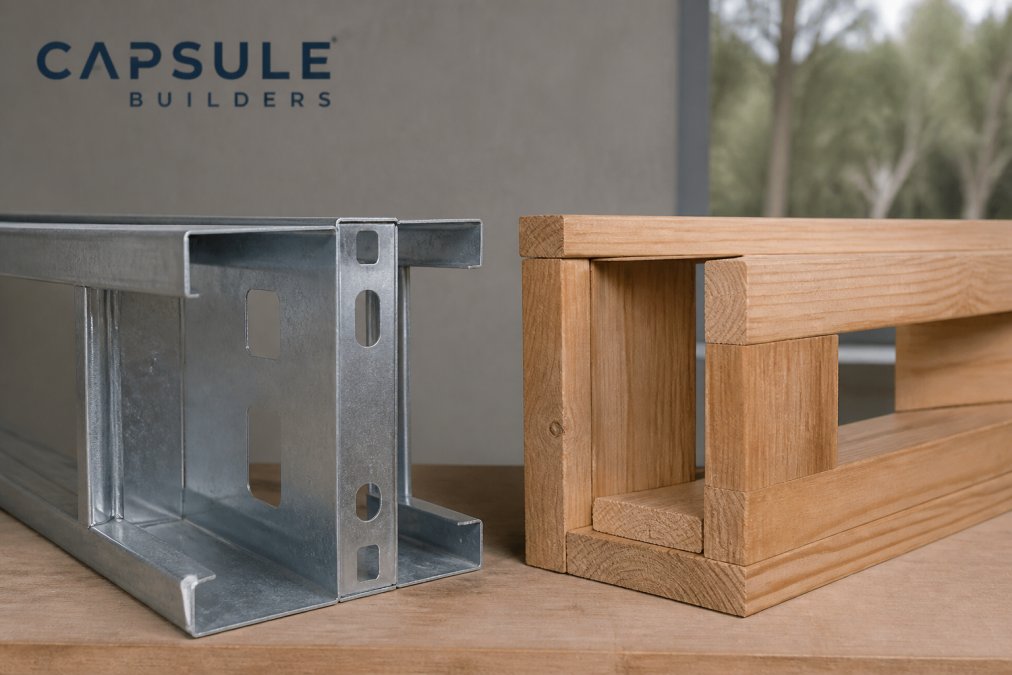
Modular homes are typically more energy efficient than on-site builds because insulation, sealing and glazing are installed in a controlled factory environment with tighter tolerances. Steel framing adds to that: it doesn't warp, twist or absorb moisture, so the envelope stays true for decades.
The energy efficiency of modular homes comes down to three things: consistent installation by the same crew out of the weather; a tighter building envelope from factory sealing of joints and penetrations; and precision engineering, with steel frames cut to tight tolerances. Steel is termite-resistant, non-combustible and dimensionally stable, so it doesn't move with humidity the way timber can (steel.org.au).
Modular Home Building Process Timeline vs Prefab Delivery
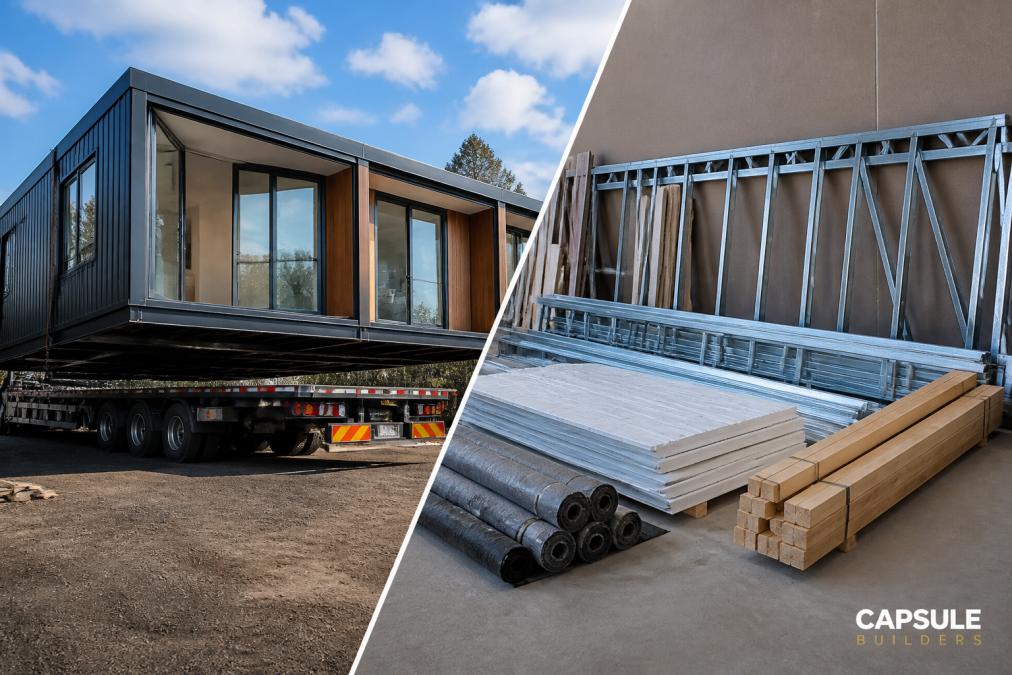
A modular build typically runs faster than a prefab kit because fabrication and site works happen in parallel: while modules are built in the factory, site prep, footings and permits progress at the same time.
The modular home building process timeline generally runs: design and documentation; approvals lodged in parallel with fabrication prep; site works prepared while modules are built; fabrication of framing, services, insulation, linings and finishes under cover; transport and crane installation onto the permanent foundation; then connection and fit-off ready for handover. The prefab alternative pushes assembly back onto the site, where weather and trades availability can stretch the schedule.
Frequently Asked Questions
Which is better, prefab or modular homes?
It depends on what you mean by quality. Modular homes are built as structurally independent, steel-framed modules in a controlled factory, then assembled on a permanent foundation. This gives consistent quality control and a 7-star minimum design target. Prefab covers a broader category including panelised kits and transportable units, which vary more in structural integrity and finish. For a permanent home, modular generally delivers tighter tolerances and better energy performance.
Do modular homes meet the same National Construction Code standards as site-built homes?
Yes. Modular homes must comply with the National Construction Code and relevant Australian Standards, just like site-built homes. In Western Australia, they also need to satisfy R-Code compliance for the specific block. An experienced modular builder handles building permits in parallel with fabrication, which means compliance is checked before modules leave the factory rather than after. This reduces the risk of on-site rectification and keeps the construction timeline predictable.
How does steel-framed modular construction compare to timber-framed prefab?
Steel-framed modular construction offers consistent precision because frames are cut and welded in a factory, not on site. Steel resists termites, warping, and moisture better than timber, which matters in varied climates. The benefits of steel-framed modular construction also include straighter walls and fewer callbacks for movement cracks. Timber-framed prefab can be cost-effective, but quality depends heavily on site conditions and the skill of the assembly crew. Steel modules hold their shape through transport and crane installation.