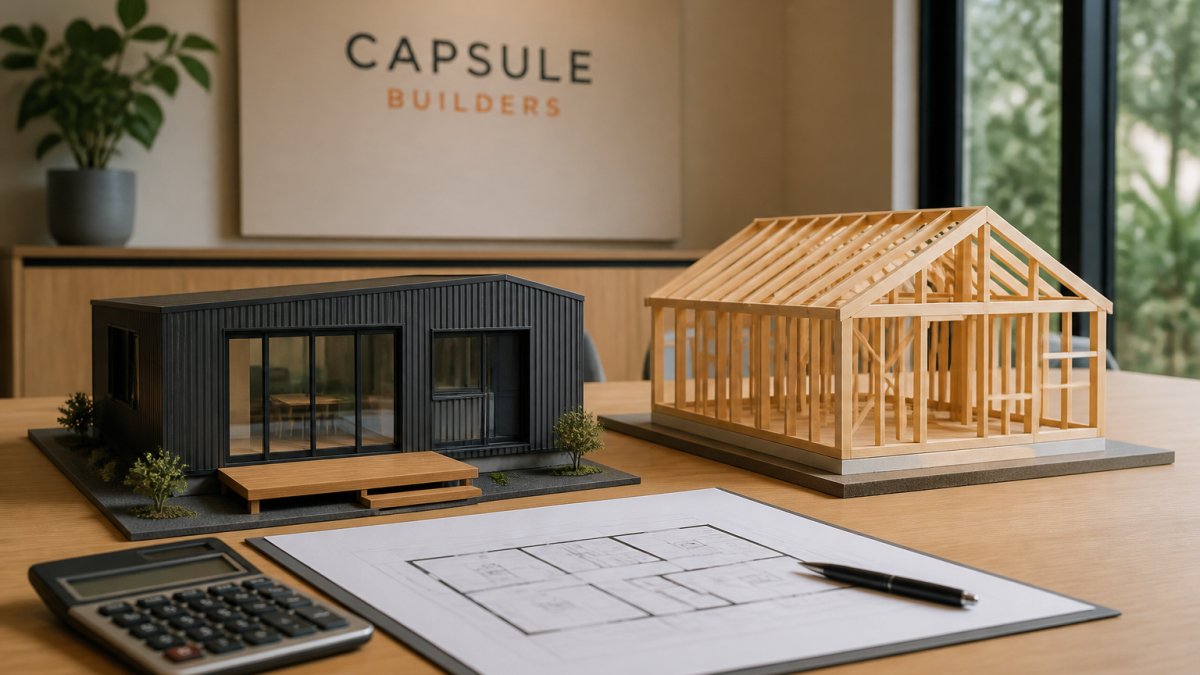
 comparison
Are Modular Homes Cheaper Than Traditional Builds?
Table of Contents
- Modular vs Traditional: The Real Cost Difference
- Modular Home Build Time vs Traditional: The Savings
- Why Quality and Design Tools Matter for Your Budget
- The Hidden Costs of Delays and Site Work
- Frequently Asked Questions
Last Updated: September 5, 2026
When comparing whether modular homes are cheaper than traditional builds, the honest answer is that modular construction typically offers significant savings on time and labour, but the final figure depends heavily on site conditions, council fees, and how you manage hidden costs. Many prospective owners focus only on the headline build price and miss the expenses that arrive later. At Capsule Builders, we specialise in custom modular builds and have seen how a transparent budget model changes the outcome. Below, we'll break down where modular genuinely saves money, where traditional builds can surprise you, and how to avoid the cost traps that catch most first-time buyers.
Modular vs Traditional: The Real Cost Difference
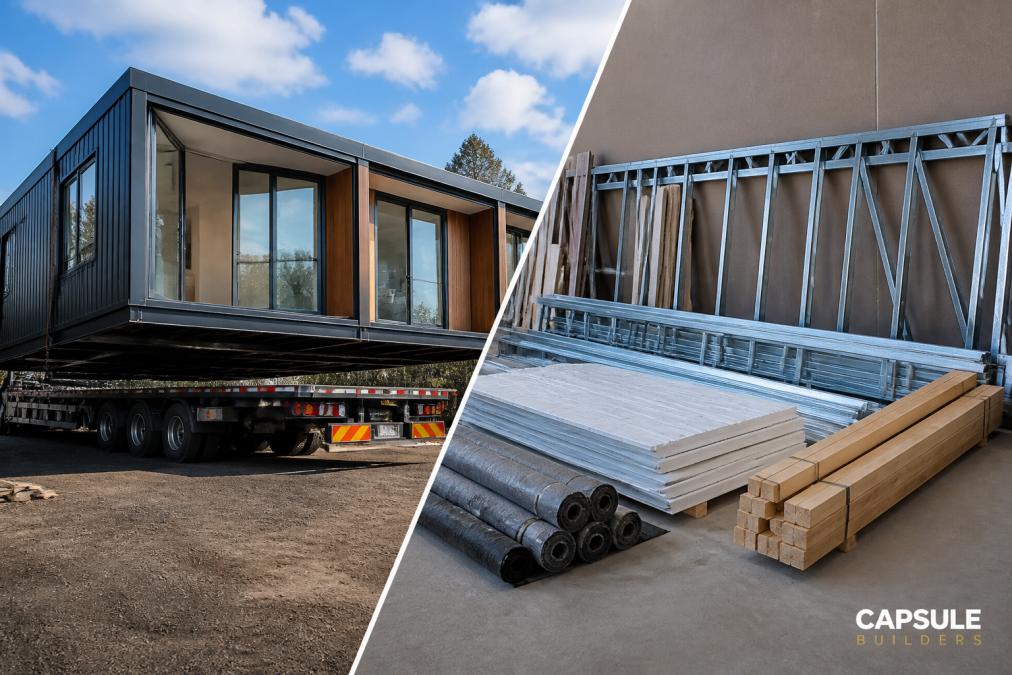
The core cost difference comes down to where and how the home is constructed. Off-site construction happens in a controlled factory environment, which reduces labour costs, material wastage, and the risk of weather delays that plague site-built projects.
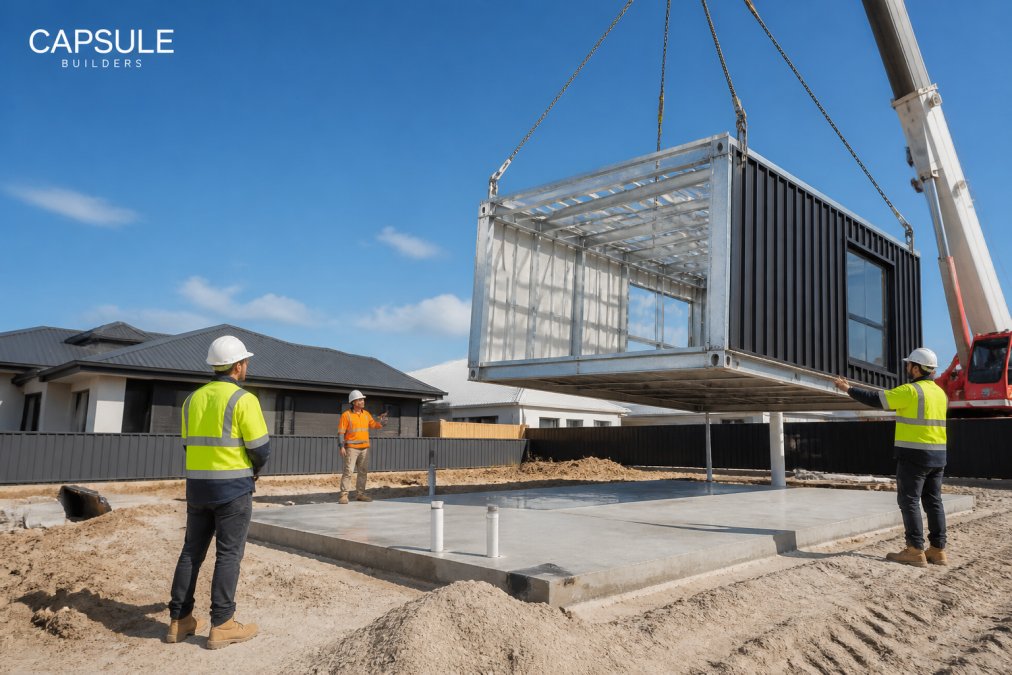
Traditional builds require sequential trades on site, each waiting for the previous one to finish. Modular construction runs parallel processes: while one module is being fabricated, site preparation and foundation work can proceed simultaneously. This efficiency is why many experienced modular builders can deliver a finished home in a fraction of the time.
| Cost Factor | Modular Construction | Traditional Build |
|---|---|---|
| Labour | Reduced on-site hours | Extended on-site schedule |
| Material wastage | Minimal, factory-controlled | Higher, weather-exposed |
| Weather delays | Largely eliminated | Common cause of overruns |
| Project management | simplified, single point | Multiple subcontractors |
Modular Home Build Time vs Traditional: The Savings
Time is money in construction, and this is where modular homes cheaper than traditional builds becomes most evident. A typical modular project can reduce overall construction timeline by months because fabrication happens indoors while your site is being prepared (nahb.org).
The parallel processing of building permits and fabrication means you are not waiting for one stage to complete before the next begins. Traditional builds often sit idle waiting for inspections, trades, or materials (the CDC). Modular eliminates most of that dead time, which directly reduces holding costs such as interest on a construction loan and temporary accommodation.
Why Quality and Design Tools Matter for Your Budget
The cheapest build is not the one with the lowest quote, but the one that avoids expensive variations later. Custom modular home design tools let you see your budget in real time as you make choices, preventing the costly surprise of discovering your selections exceed your capital expenditure halfway through construction.
A fixed-price contract gives you certainty, but only if the design is locked before fabrication begins. Tools like Capsule Studio™ allow you to adjust finishes, layout, and specifications while watching the budget update instantly. This transparency means you make informed trade-offs before committing, not after.
The Hidden Costs of Delays and Site Work
The true test of whether modular homes are cheaper than traditional builds comes when you account for the hidden costs of delays. Every week a traditional build runs over schedule adds interest, temporary housing costs, and often storage fees. Modular's faster build time directly reduces these carrying costs.
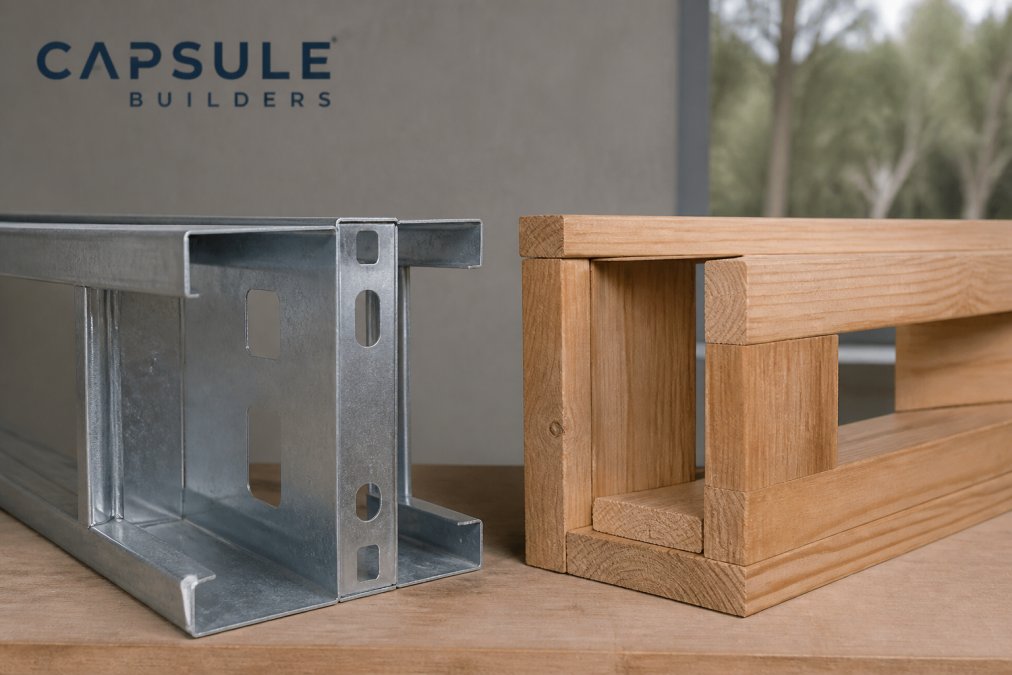
Site preparation and foundation costs apply to both methods, but modular's lighter steel-framed modules can sometimes reduce foundation requirements. Utility connection, council approval fees, and transportation logistics vary by location, so check what your local council charges before budgeting.
Financing hurdles also differ. Some lenders are unfamiliar with modular construction loans, so confirm your bank will finance the project before committing (hud.gov). Engaging a complete modular builder including installation can simplify this process, as they coordinate everything from foundation to handover under a single contract. A builder experienced in modular projects can often guide you through this process, ensuring your total cost of ownership stays predictable from design to handover.
Frequently Asked Questions
Are there hidden costs associated with modular home construction?
Yes, just like any build. The quoted price for a modular home typically covers the factory fabrication and standard installation. Site-specific costs like foundation, utility connections, and site preparation are often quoted separately. Unexpected site conditions, such as difficult access or rock removal, can add to the final bill. A transparent builder will itemise these costs upfront. Always ask for a detailed breakdown of what is included in your quote to avoid surprises.
Do modular homes hold their value as well as traditional homes?
Yes. A well-built, permanently installed modular home is valued similarly to a site-built home of comparable size and quality. Lenders and valuers assess the finished property, not the construction method. The key factors are the quality of the finishes, the design, and the land it sits on. Choosing a reputable builder who uses high-quality materials, like steel frames, and offers a structural warranty can help secure the long-term value of your investment.
Is a modular home cheaper when you factor in build time?
A faster build time often translates to significant savings. Because modules are fabricated off-site while permits are processed, the overall construction schedule is much shorter than a traditional build. This reduces the cost of your construction loan interest and eliminates many weather delays that can stall a site-built project. While the base price per square metre can be comparable, the reduced labour on site and the speed of handover contribute to the overall cost-effectiveness of a modular home.
Choosing between modular and traditional construction ultimately comes down to how you value time, certainty, and control over your budget. Capsule Builders offers bespoke, steel-framed modular homes with the Capsule Studio™ tool for real-time design and budget management, plus parallel processing of permits and fabrication for faster delivery. Start your concept today and see how transparent, efficient building can work for your land and lifestyle.