 ultimate-guide
Energy Efficiency Benefits for Modular Home Resale
Table of Contents
- How 7-Star Energy Rating Modular Homes Attract Buyers
- Sustainable Modular Home Design Features That Add Value
- NatHERS Rating Impact on Property Value: What Sellers Should Know
- Frequently Asked Questions
Last Updated: September 28, 2026
How 7-Star Energy Rating Modular Homes Attract Buyers
Energy efficiency benefits for modular home resale start with one number: the 7-star rating. Buyers in Western Australia scan listings for it before booking an inspection, because it signals lower running costs and better comfort.
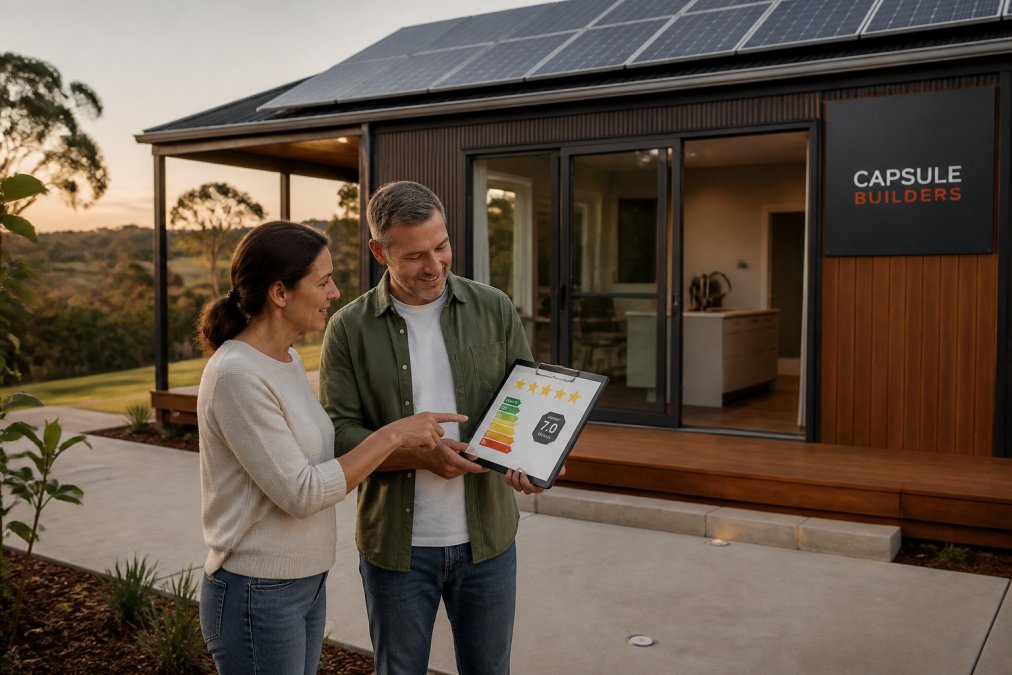
A 7-star home typically costs less to heat and cool than an older 6-star equivalent, a difference buyers calculate before offering.
Sustainable Modular Home Design Features That Add Value
Orientation, glazing, insulation, and thermal mass do the heavy lifting: a north-facing living area with well-placed eaves keeps summer sun out and winter sun in, while double glazing and higher insulation reduce heat loss and gain. These features work as a system, so one weak point, such as thermal bridging through a steel frame, undermines the rest.
| Feature | What It Does | Resale Impact |
|---|---|---|
| Building orientation | Captures winter sun, blocks summer heat | Higher buyer interest |
| Insulation levels | Reduces heat transfer | Lower running costs |
| Double glazing | Cuts heat loss and noise | Premium listing appeal |
Ventilation and indoor air quality round this out, and buyers with allergies or young children notice these details.
NatHERS Rating Impact on Property Value: What Sellers Should Know
The NatHERS rating assesses thermal performance under standardised conditions, predicting how much energy the home needs to stay comfortable, the figure lenders, insurers, and buyers now reference. Higher ratings support stronger valuations, and a well-rated modular home often beats a traditional build on running costs.
Solar panels, batteries, and ventilation systems need servicing to keep performing, keep records and pass them to the buyer. Green loans increasingly favour energy-efficient homes.
Energy efficiency is no longer a nice-to-have in modular home resale. It is the difference between a fast sale and a listing that lingers. Capsule Builders specialises in custom modular builds with a 7-star minimum design target, solar and battery-ready options, and the Capsule Studio™ tool that lets you design and budget in real time. As an experienced modular builder, we know you can build anything modular when the design starts right. Start your concept with Capsule Builders and build a home that sells itself.
Frequently Asked Questions
How does a 7-star energy rating affect the resale value of a modular home?
A 7-star rating signals lower running costs to buyers. In practice, homes with higher ratings often attract more interest because they promise reduced heating and cooling bills. While exact resale premiums vary by location and market conditions, energy performance is increasingly listed alongside bedrooms and land size in property ads. For modular homes, the factory-built envelope often achieves airtightness and insulation levels that support these ratings, making the home more marketable when it's time to sell.
Do energy-efficient modular homes sell faster than traditional builds?
They can sell faster when buyers are comparing running costs. A home with documented energy performance, such as a NatHERS certificate, gives buyers confidence in long-term savings. Many buyers now ask for energy bills before making an offer. Modular homes built to a 7-star minimum with solar and battery readiness appeal to that demand. Speed of sale depends on price and location, but strong energy credentials remove a common objection about ongoing costs.
What sustainable modular home design features add the most resale value?
Features that reduce bills and improve comfort tend to add value: high insulation levels, double glazing, thermal mass, airtightness, and efficient ventilation systems. Passive solar design and correct building orientation also matter. Buyers recognise these as lower maintenance and lower cost. Solar panels with battery storage are a strong selling point. When these features are documented through an energy rating, they become tangible assets rather than vague claims.