 ultimate-guide
Benefits of Off Site Home Fabrication
Table of Contents
- How Off Site Home Fabrication Works
- The Modular Home Construction Timeline: Faster Than You Think
- The Energy Efficiency of Modular Homes: Built for Performance
- Frequently Asked Questions
Last Updated: September 7, 2026
How Off Site Home Fabrication Works
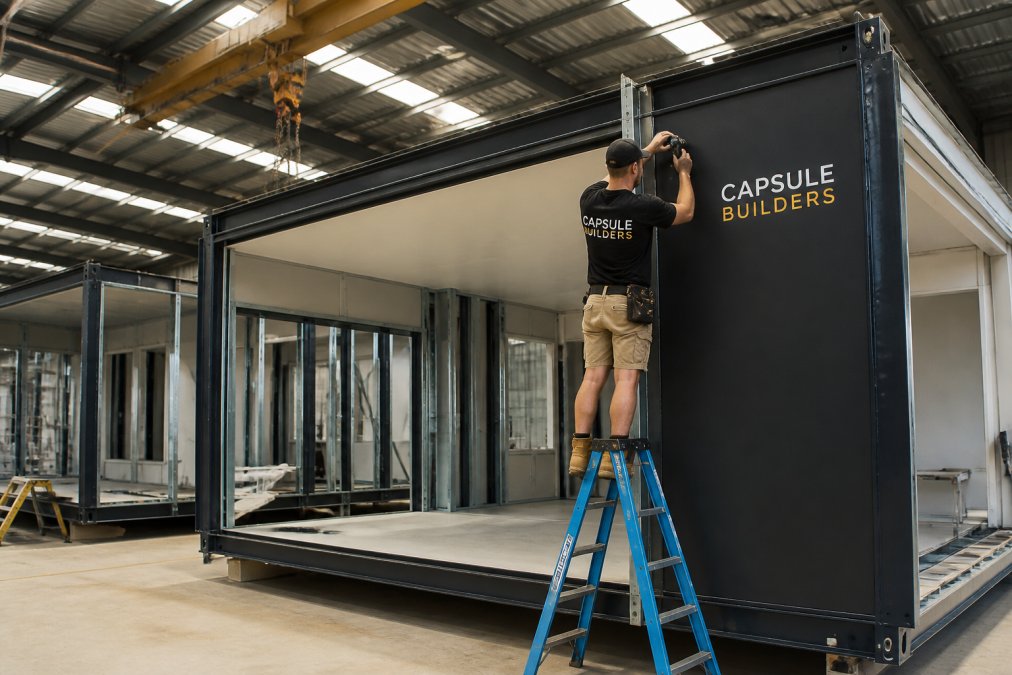
Off site home fabrication is the process of constructing a home in factory-controlled modules before transporting and assembling them on your land. Rather than building entirely on site, an experienced modular builder fabricates steel-framed sections in a precision environment, then delivers and installs them.
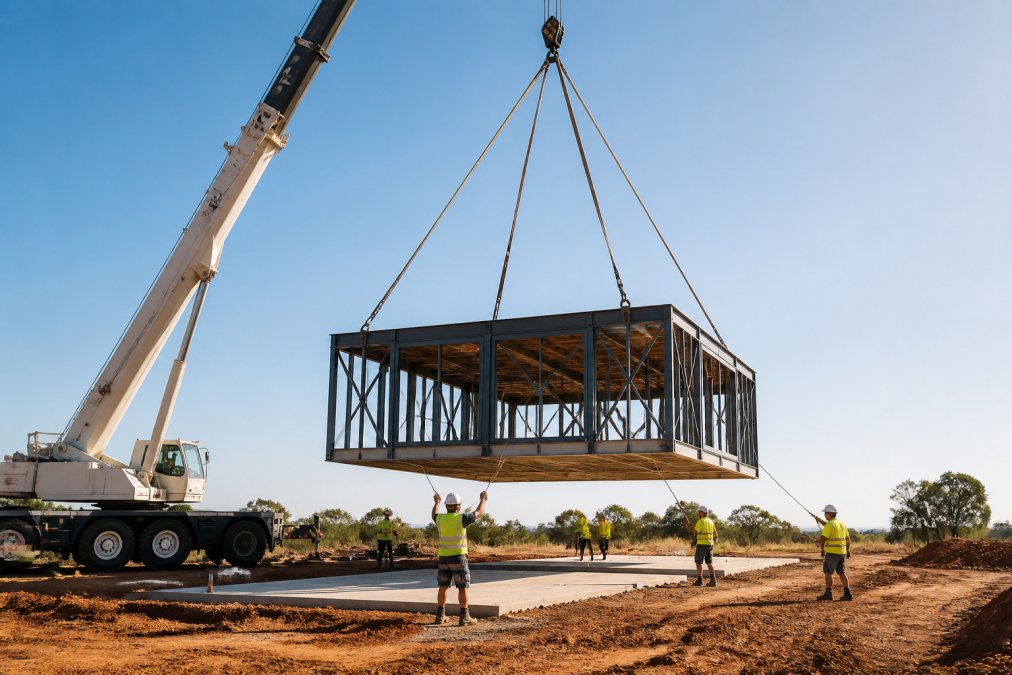
The process begins with design and engineering, where your floor plan is translated into pre-engineered components. Building permits and fabrication often run in parallel. Once modules are complete, they arrive on a truck and are lifted into place by crane, typically over days rather than months.
The Modular Home Construction Timeline: Faster Than You Think
The modular home construction timeline compresses what a traditional build spreads across many months (hud.gov). Because fabrication happens indoors and site work happens simultaneously, overall project delivery is significantly shorter, and weather delays barely register when finishes are assembled under a roof (nahb.org).
Most of the schedule advantage comes from removing sequential bottlenecks: multiple modules are fabricated at once, then joined on site. You can build anything modular, so a compact studio and a full family home follow the same efficient logic, resulting in an earlier handover and less time paying rent or holding finance.
The Energy Efficiency of Modular Homes: Built for Performance
The energy efficiency of modular homes starts with precision engineering and factory-controlled assembly. Tighter tolerances mean fewer gaps in insulation and cladding, directly improving thermal performance (energy.gov). Every joint and seal is checked during fabrication, not left to the variables of an open building site.
Sustainable building practices are easier to enforce when waste is measured and materials are cut to exact specifications, and the combination of a 7-star minimum design target and solar-ready options makes a meaningful difference over the life of the home.
Reducing site disruption is another benefit: fewer trades on site means less noise, waste, and a cleaner neighbouring environment. Customisation versus standardisation is a genuine trade-off, since bespoke designs require more engineering than catalogue options, so working with an experienced modular builder who can advise on these points makes the process considerably smoother.
| Consideration | Modular Build | Traditional Build |
|---|---|---|
| Construction timeline | Compressed, parallel work | Sequential, weather-dependent |
| Quality control | Factory-checked tolerances | On-site variables |
| Energy performance | High, precision-sealed | Depends on site conditions |
For buyers weighing the benefits of off site home fabrication, the practical case is strong. Capsule Builders specialise in custom modular builds, designing each home around your land and lifestyle with a real-time budget tool that keeps costs transparent from concept to handover.
Choosing how to build your home is a significant decision, and the modular method asks you to trust a process you cannot watch unfold daily. That trust is easier to place when fabrication happens under controlled conditions with clear quality checks at every stage, and a complete modular builder including installation handles the entire process from factory floor to final handover.
Frequently Asked Questions
How does off-site fabrication reduce the overall construction timeline?
Off-site fabrication compresses the project schedule because site preparation and module construction happen at the same time. While the factory builds your home's modules, your block can be levelled and foundations laid. This parallel process cuts months off a traditional build. An experienced modular builder can often hand over a completed home significantly faster than a conventional construction project, getting you into your new house sooner.
Does off-site construction improve the energy efficiency of a home?
Yes. Factory-controlled environments allow for precision-engineered insulation and airtight construction, which are difficult to achieve consistently on a traditional site. This leads to better thermal performance and lower energy bills. Many modular builders, like Capsule Builders, design to a 7-star minimum energy rating and offer solar and battery-ready options as standard, making the energy efficiency of modular homes a key advantage.