 ultimate-guide
Are Modular Homes Permanent Structures? Class 1a Guide
Table of Contents
- How the National Construction Code Class 1a Requirements Define Permanence
- The Difference Between Transportable and Permanent Modular Homes
- The Modular Home Council Approval Process and Building Permits
- Where Permanence Affects Resale, Insurance and Relocation
- Frequently Asked Questions
Last Updated: September 16, 2026
How the National Construction Code Class 1a Requirements Define Permanence
Whether modular homes permanent structures are comes down to one question: does the finished dwelling meet the National Construction Code as a Class 1a building? A Class 1a dwelling is a single residence that complies with the NCC and holds the required building approval. Meet that bar and the home is permanent in the eyes of regulators, lenders and insurers.
The NCC does not care whether walls were built on your block or in a factory, only about footings, structural integrity, fire and energy performance, and building surveyor sign-off. This guide from Capsule Builders breaks down the difference between a transportable building and a permanent modular home.
The Difference Between Transportable and Permanent Modular Homes
A transportable home is a relocatable building, often registered like a caravan and resting on a chassis. A modular homes permanent build is fixed to land on a permanent foundation with footings and a sub-floor designed for that site, so it becomes part of the real property.
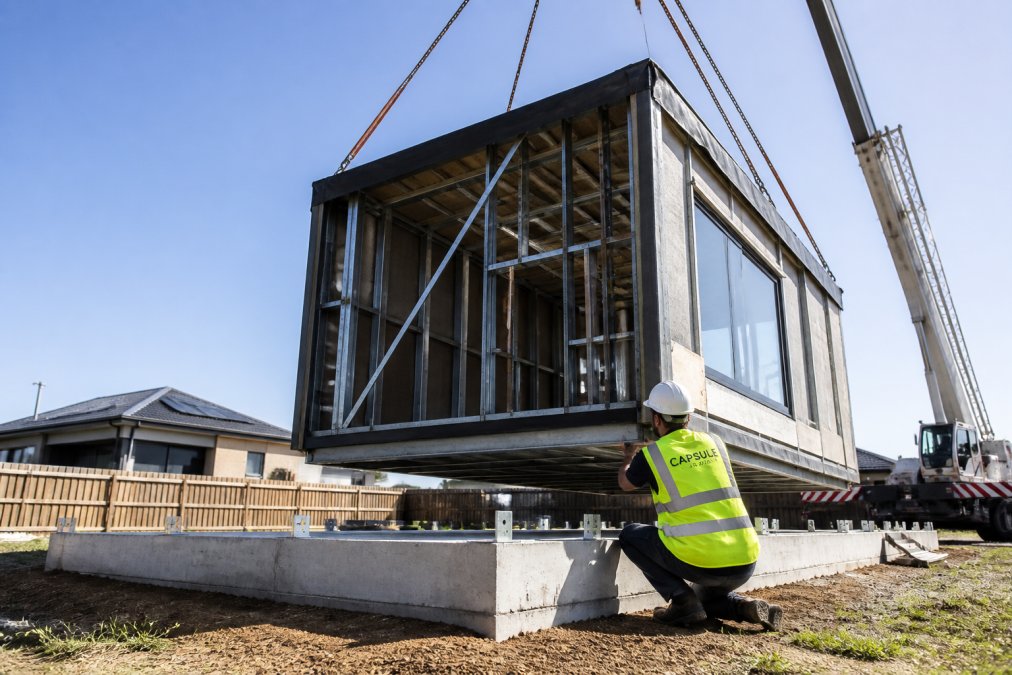
That distinction drives everything downstream. Transportable units can usually be relocated and may be treated as personal property. Permanent modular builds are engineered for a fixed site, hold a building permit, and are assessed as real property. Ask any experienced modular builder: the footings and certification make the difference, not the factory.
| Feature | Transportable | Permanent Modular |
|---|---|---|
| Foundation | Chassis or stumps | Engineered footings |
| Legal status | Often personal property | Real property |
| Approval pathway | Varies by council | Full building permit |
The Modular Home Council Approval Process and Building Permits
The modular home council approval process follows the same path as a site-built home: development approval where required, then a building permit assessed against the NCC and local council regulations. Zoning, setbacks and dwelling classification all apply before a single module is fabricated.
Because fabrication runs in parallel with approvals, an experienced modular builder can compress the timeline considerably. Capsule Builders specialises in custom modular builds and processes permits alongside fabrication, so you can build anything modular without the usual sequential delays. As a complete modular builder including installation, the team also handles cranage, site connection and sub-floor fixing, so the dwelling is properly set on its permanent foundation rather than simply delivered. Building surveyor sign-off on the sub-floor and footings formally fixes the dwelling to land.
Where Permanence Affects Resale, Insurance and Relocation
Permanence shapes resale value, insurance premiums and your options later. A certified Class 1a dwelling on a permanent foundation sits on land title and moves through conveyancing like any other house. An uncertified transportable unit often does not.
Insurance is the clearest tell. Insurers assess structural lifespan, footings and compliance certification, and a permanent modular home with full NCC documentation is generally easier to insure on standard terms than a relocatable building. Relocation is only realistic for transportable units; once a permanent modular home is fixed to land, moving it is a demolition-scale project.
For buyers weighing this up, the Australian Building Codes Board guidance on the NCC sets out how Class 1a dwellings are classified, and Your Home's guide to building approvals explains the approval steps in plain terms. Checking ASIC's Moneysmart guidance on home loans helps first-time buyers understand how lenders view a dwelling's legal status before they commit.
Frequently Asked Questions
What is the legal classification of a modular home under the National Construction Code?
A modular home can be classified as a Class 1a dwelling under the National Construction Code when it is a single dwelling fixed to land and built to the relevant building standards. The classification depends on how the home is sited and certified, not on whether it was built off-site. If it is fastened to permanent footings and approved by a building surveyor, it sits in the same class as a site-built house. A relocatable building that is not fixed to land falls outside this classification.
Do modular homes require the same building permits as traditional homes?
Yes. A permanent modular home needs the same building approval as a site-built home, including a building permit and compliance certification against the National Construction Code. The modular home council approval process runs through your local council and a registered building surveyor, covering zoning requirements, footings and dwelling classification. Off-site construction changes where the modules are built, not the approvals required. Your builder should handle this alongside fabrication to save time.
Will banks and buyers accept a permanent modular home for a mortgage?
When a modular home is fixed to land and classified as a Class 1a dwelling, it is generally treated as real property. That means it can be valued like a site-built home, which supports mortgage eligibility and resale. The key factors are the land title, the building approval and evidence the home is permanently affixed. A home that stays classified as a relocatable building or personal property is harder to finance and may affect asset valuation at resale.
The challenge is that permanence is decided long before the keys are handed over, in footings, certification and approvals that are easy to get wrong. Capsule Builders specialises in custom modular builds, pairing bespoke, steel-framed modules with parallel permit processing and instant R-Code compliance review, so you can build anything modular on a permanent, certifiable foundation. Get started with Capsule Builders and start your concept with confidence.