 blog
blog
Sustainable Features for Modern Modular Homes
Table of Contents
- Sustainable Features for Modern Modular Homes: What Matters Most
- Passive Design Features for Homes and Sustainable Building Materials
- Solar Panels and Battery Storage for Modular Homes, Plus Water-Saving Features
- Frequently Asked Questions
Last Updated: October 12, 2026
Sustainable Features for Modern Modular Homes: What Matters Most
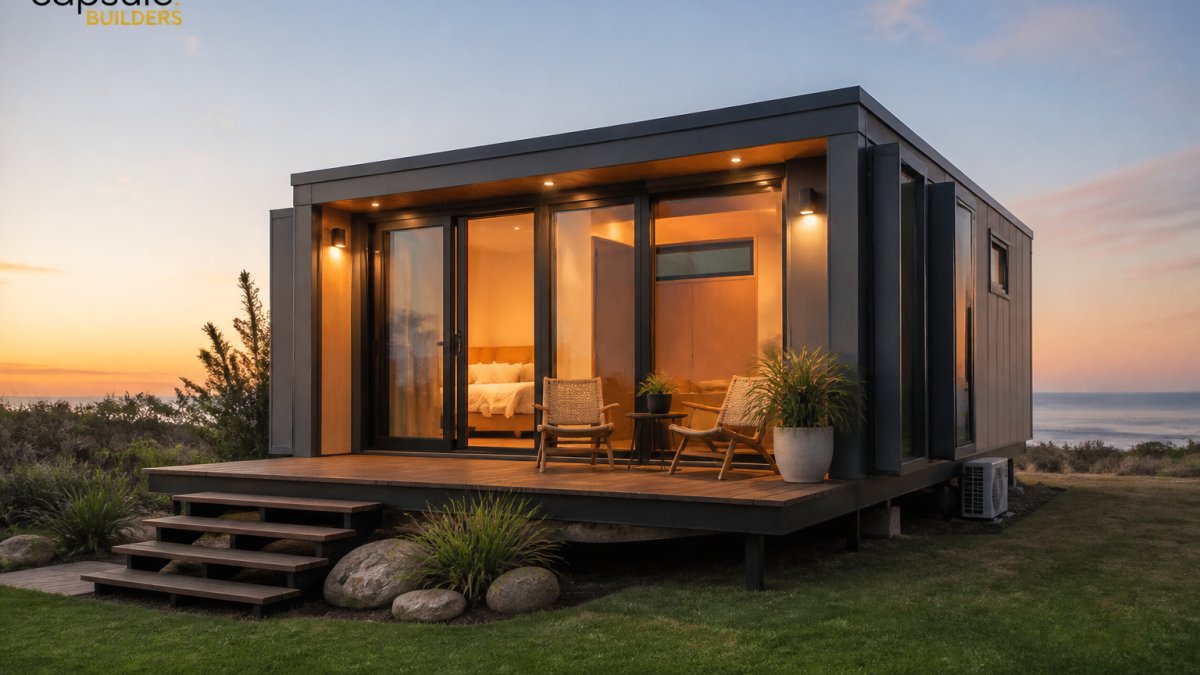
Sustainable features for modern modular homes are the design choices that cut energy use, water use, and waste while keeping the house comfortable year-round. At Capsule Builders, we specialise in custom modular builds, and we see the same pattern again and again: buyers focus on solar panels first, when the real savings start with the building itself.
A common mistake is treating sustainability as an add-on. It works better as a set of connected decisions made before fabrication begins. Below, we break down what actually matters most.
Passive Design Features for Homes and Sustainable Building Materials
Passive design features for homes are the choices that heat, cool, and light a house using the climate around it rather than added power. Orientation, shading, glazing, and airtightness do most of the work.
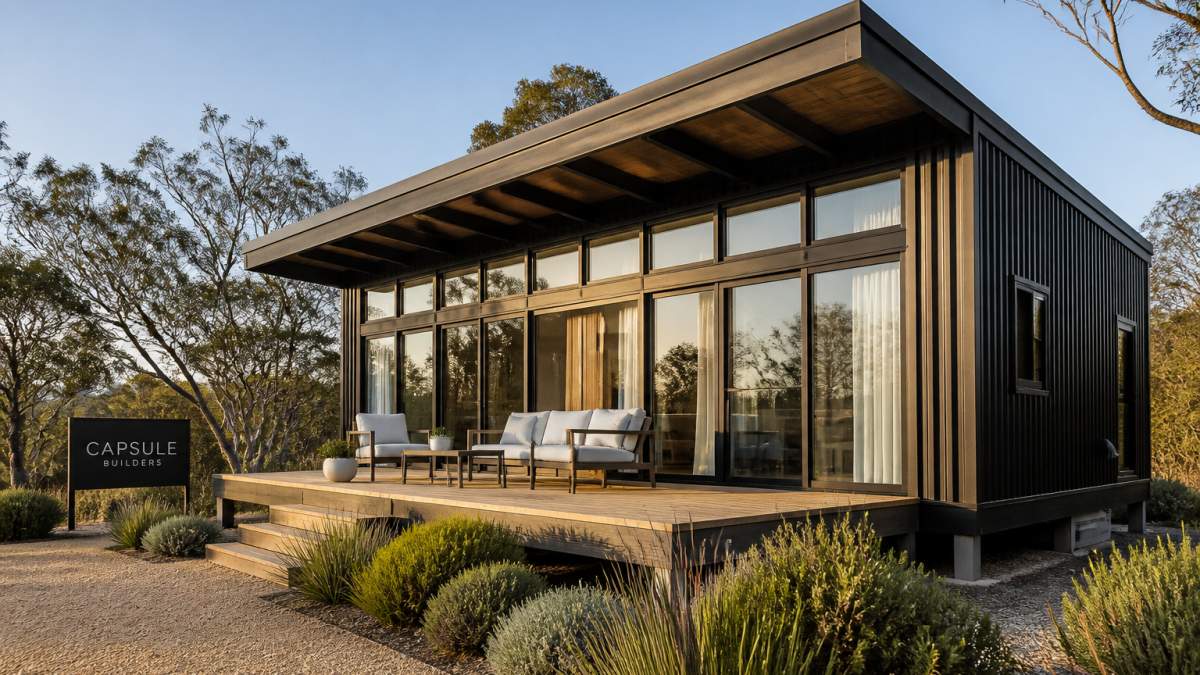
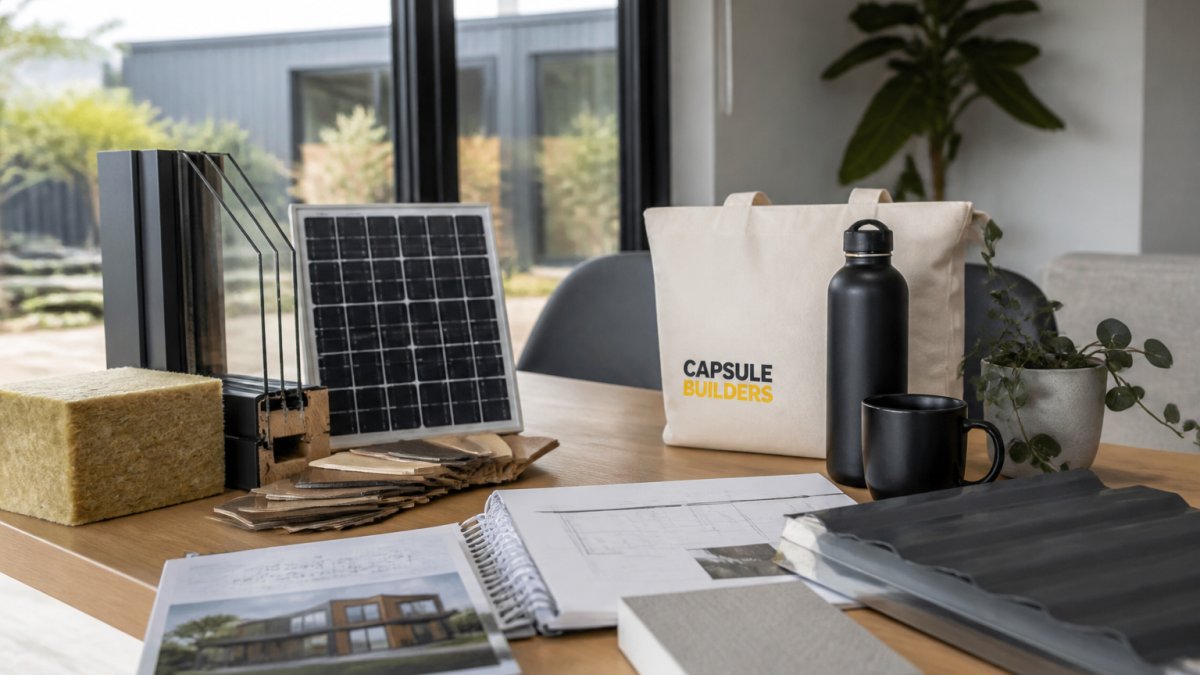
Start with orientation. Living areas facing the winter sun, with deep eaves to block the summer sun, cut heating and cooling demand before any appliance is switched on. Double-glazed windows, high-performance insulation, and structural insulated panels keep that comfort in. Airtightness and natural ventilation then control fresh air without wasting it.
Materials matter too. Sustainable building materials include recycled steel, reclaimed wood, sustainable timber, and bamboo. Steel-framed modules suit this well because they resist pests and movement, and off-site construction means material efficiency is built into the process: factory-built components are cut to size, so construction waste drops.
Solar Panels and Battery Storage for Modular Homes, Plus Water-Saving Features
Solar panels and battery storage for modular homes handle the power side once the building envelope is sorted. A solar and battery-ready design lets you add generation now or later, and battery storage keeps the lights on after sunset. This is where off-grid capability becomes realistic rather than a stretch.
Water-saving features for homes cover the rest:
- Rainwater harvesting for garden and outdoor use
- Greywater reuse for suitable non-potable needs
- Water-efficient fixtures throughout
- Native, low-water landscaping
Together these cut utility bills and environmental impact. One honest caveat: batteries and larger solar arrays add cost, and payback depends on your usage and location. We'd rather you size the system to your household than oversell capacity you won't use.
Frequently Asked Questions
What are the key features of a sustainable modular home?
Sustainable modular homes combine passive design, high-performance insulation, double-glazed windows, and airtight construction to reduce heating and cooling needs. Add solar panels, battery storage, water-efficient fixtures, and low-toxicity materials, and you have a home that cuts energy and water use while staying comfortable. Because modules are built in a controlled factory, material waste is lower and quality is consistent. An experienced modular builder can tailor these features to your block and budget.
Can modular homes include solar panels and battery storage?
Yes. Solar panels and battery storage for modular homes are straightforward to include when they are planned from the start. A solar and battery-ready design lets you add panels and storage now or later without reworking the electrical system. Pairing solar with battery storage reduces reliance on the grid and can lower operating costs over time. Ask your builder to confirm the roof structure and switchboard are ready for the system you want.
How can water use be reduced in a modular home?
Water-saving features for homes include water-efficient showerheads, taps, and toilets, plus rainwater harvesting for garden use and greywater reuse where local rules allow. Choosing native, low-water landscaping further cuts outdoor demand. In a modular build, these fittings and systems are specified during design, so they are installed in the factory and tested before delivery. This makes water efficiency a standard part of the build rather than an afterthought.
Sustainability in a modular home comes down to sequencing: envelope first, generation second, water third. That order is what separates a genuinely efficient home from one with panels bolted on. Capsule Builders designs each home around your land and lifestyle, with a 7-star minimum design target, solar and battery-ready options, and our Capsule Studio™ tool so you can see the trade-offs and manage your budget in real time. Start your concept and build something that performs for decades.