 blog
blog
Modular vs Traditional Home: Speed Comparison
Table of Contents
- How Modular Home Construction Delivers Speed
- Understanding the Modular Home Construction Timeline
- Benefits of Off-Site Construction Methods
- Risks of Modular Homes and How to Mitigate Them
- Frequently Asked Questions
Last Updated: August 23, 2026
How Modular Home Construction Delivers Speed
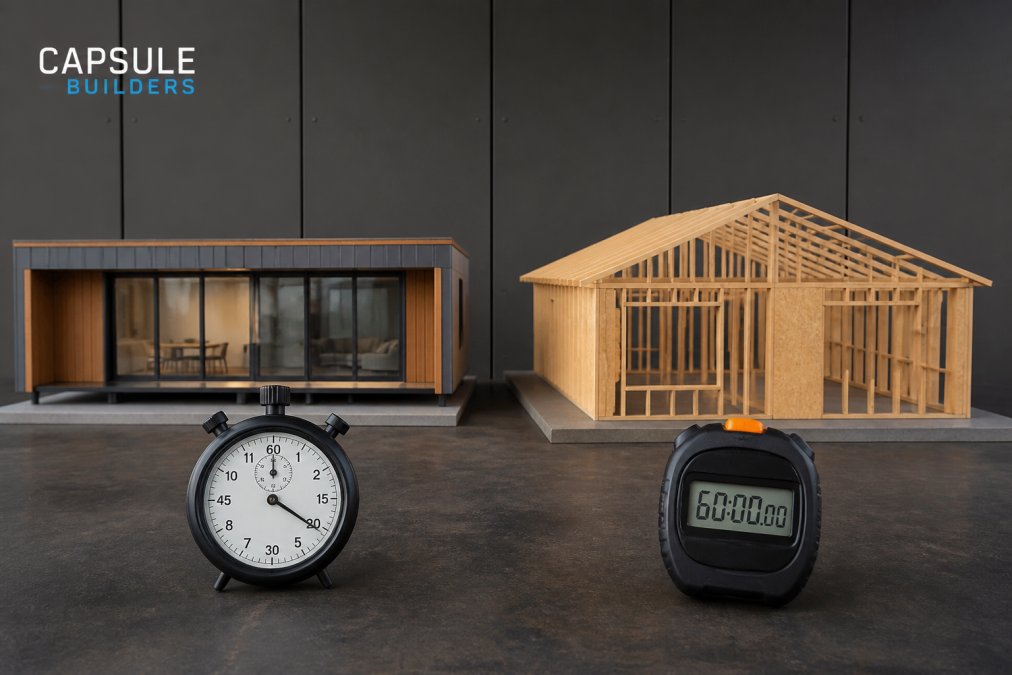
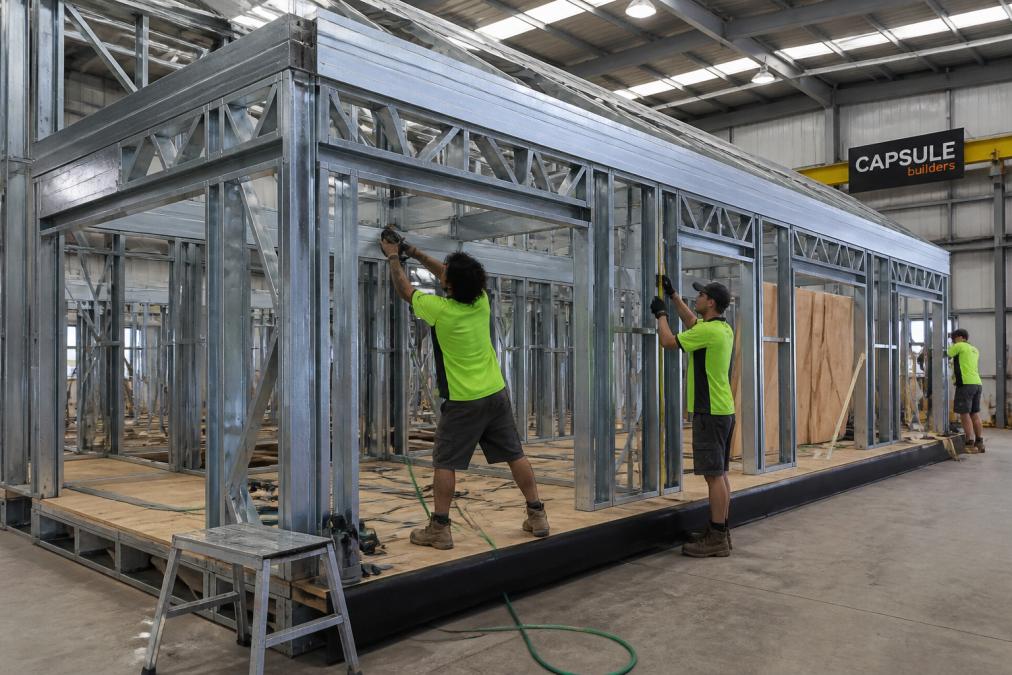
Modular home construction speed outpaces traditional building because work happens in parallel: factory fabrication occurs simultaneously with site preparation and permitting. While your foundation is prepared, an experienced modular builder completes structural components with precision engineering in a controlled factory setting. Traditional site-built homes must complete foundations first, then wait for weather windows to frame, weatherproof, and finish, each phase dependent on the previous one.
The factory-controlled environment eliminates weather delays that plague on-site construction. Rain doesn't halt interior finishing. Temperature fluctuations don't compromise material quality. Quality assurance happens consistently because inspectors work in stable conditions, not battling elements.
Understanding the Modular Home Construction Timeline
Site preparation happens in parallel with fabrication, your builder orders materials and begins factory work while your land receives foundation work. Once modules arrive, assembly takes 2-4 weeks depending on complexity.
Building codes compliance accelerates through off-site construction. Inspectors verify structural integrity in the factory before modules leave the facility, reducing on-site inspection delays and rework (iccsafe.org). Weather-dependent delays vanish because factory production continues regardless of conditions, and your site crew works in shorter windows without holding the critical path hostage to seasonal constraints.
Benefits of Off-Site Construction Methods
Off-site construction delivers consistent factory-built quality that on-site labour struggles to match. Precision engineering in controlled environments produces tighter tolerances, fewer defects, and more reliable structural integrity.
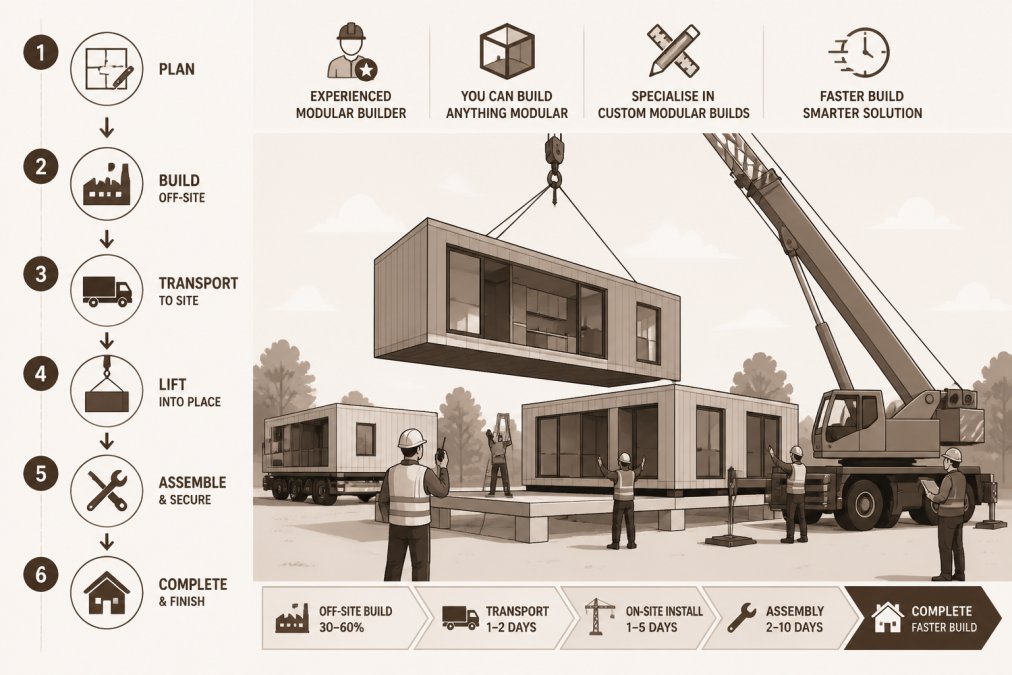
Material efficiency improves dramatically through optimised cutting and careful inventory management, reducing waste and environmental impact (peer-reviewed research). Labour efficiency compounds the speed advantage, factory workers specialise in repetitive tasks, building speed and consistency. You can build anything modular because the factory approach scales from compact retreats to complex family homes without sacrificing efficiency.
Reduced site disruption matters for properties with tight access or sensitive surroundings. Modular construction minimises the duration of heavy machinery, noise, and traffic on your land, keeping your site more accessible during the build. A complete modular builder including installation manages the entire process from design through on-site assembly, coordinating logistics and minimising disruption to your property.
Risks of Modular Homes and How to Mitigate Them
Transportation logistics present real constraints. Modules must fit through roads and around obstacles. Regional sites with limited access require creative solutions, smaller modules, alternative routes, or specialised transport. An experienced modular builder assesses site logistics early and adjusts designs accordingly.
Financing differences can surprise first-time buyers. Some lenders treat modular homes differently, requiring staged disbursements tied to factory completion and on-site assembly. Verify your lender's modular experience before committing.
Post-delivery finishing extends beyond practical completion. Move-in ready requires utility connections, final inspections, and additional finishing work. Budget 2-4 weeks after practical completion for move-in readiness (nahb.org).
Design constraints exist but are less restrictive than many assume. Modules must fit transport dimensions, which limit width and height. Experienced modular builders work within these constraints creatively, stacking modules and rotating configurations to create spacious layouts despite standard component sizes.
| Aspect | Modular Construction | Traditional Site-Built |
|---|---|---|
| Factory-controlled environment | Yes | No |
| Parallel processing of site and fabrication | Yes | Sequential phases |
| Weather-dependent delays | Minimal | Significant |
| Quality assurance consistency | High | Variable |
| Material waste | Lower | Higher |
| On-site labour duration | Shorter | Extended |
| Practical completion to move-in | 2-4 weeks | Variable |
Modular home construction speed delivers measurable advantages for buyers who value faster handover and reduced site disruption. The parallel processing of factory fabrication and site preparation compresses timelines that traditional builds cannot match. If you're evaluating construction methods for your next project, consider how building codes and construction standards apply to modular approaches in your jurisdiction, and discuss timeline expectations with experienced modular builders. Start your concept today to see how modular construction timelines compare for your specific project.
Frequently Asked Questions
Q: How much faster is modular home construction compared to traditional building?
A: Modular home construction can be significantly faster than site-built homes. Factory-controlled environments eliminate weather delays, and parallel processing allows building permits to advance while fabrication occurs simultaneously. Actual timelines depend on site preparation, foundation readiness, and utility connection complexity.
Q: What is the typical modular home construction timeline from start to move-in?
A: A complete modular home construction timeline includes site preparation, permit processing and fabrication in parallel, on-site assembly and utility connection, and final inspections. Move-in ready status depends on finishing work and final approvals. As an experienced modular builder, we manage these phases to minimise delays and keep projects on track.
Q: What are the main risks of modular homes, and can they be managed?
A: Common risks include logistics delays, site access constraints, foundation preparation issues, and coordination between fabrication and on-site assembly. Weather-dependent site work can still cause delays despite factory benefits. Quality control and structural integrity depend on factory precision and on-site installation expertise. Working with a builder who specialises in custom modular builds and manages logistics carefully reduces these risks significantly.