 how-to
How to Reduce Carbon Footprint with Modular Construction
Table of Contents
- Benefits of Steel-Framed Modular Homes
- Reducing Construction Waste Through Off-Site Manufacturing
- Energy Efficiency in Prefab Housing
- Frequently Asked Questions
Last Updated: September 30, 2026
Benefits of Steel-Framed Modular Homes
Steel-framed modular construction cuts carbon two ways: less factory waste and less energy to run the finished house. To reduce carbon footprint with modular construction, start with the frame.
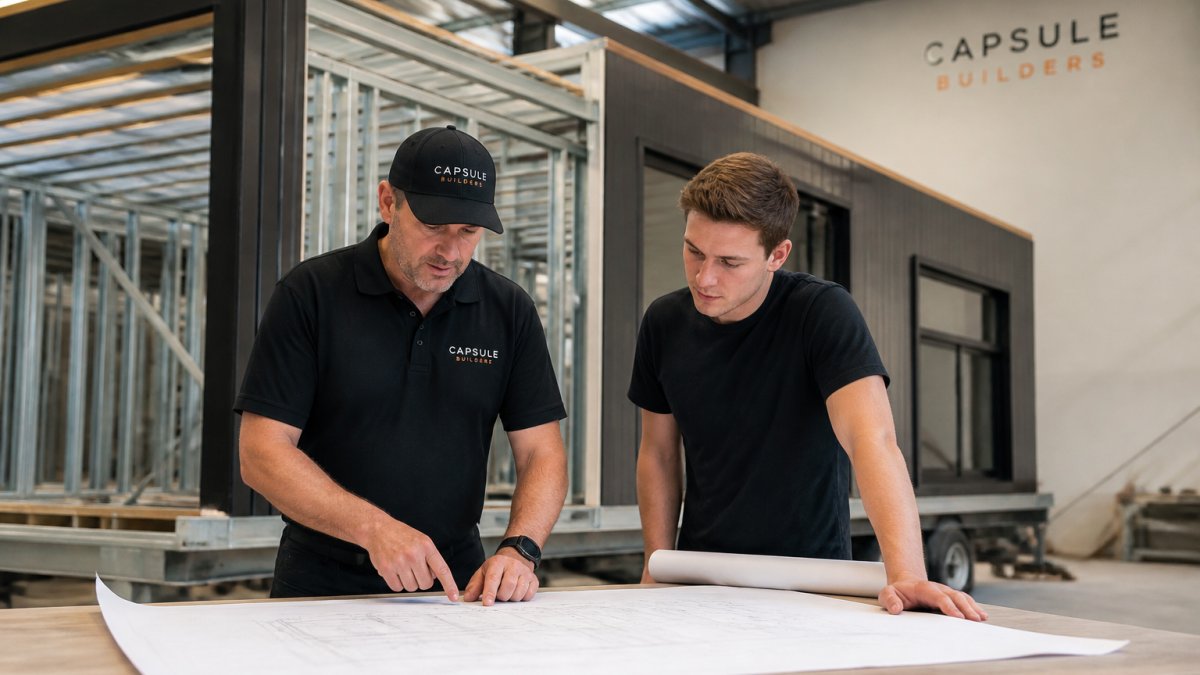
At Capsule Builders, we build steel-framed modules off site, then crane them onto your block, ideal for an experienced modular builder who wants precision, not guesswork. Steel frames arrive pre-cut to millimetre tolerances, so there is little offcut waste and no wet trades on site.
The bigger win is the envelope: a straight steel frame lets insulation sit tight with no gaps, delivering better thermal performance and lower operational emissions year after year.
- Straight frames, tight insulation - fewer gaps, less heat loss
- No wet trades - less water, mess and rework
- Recycled content - steel is one of the most recycled materials on earth
Reducing Construction Waste Through Off-Site Manufacturing
Off-site manufacturing moves cutting, fixing and finishing into a controlled factory, removing most of the waste that plagues traditional builds.
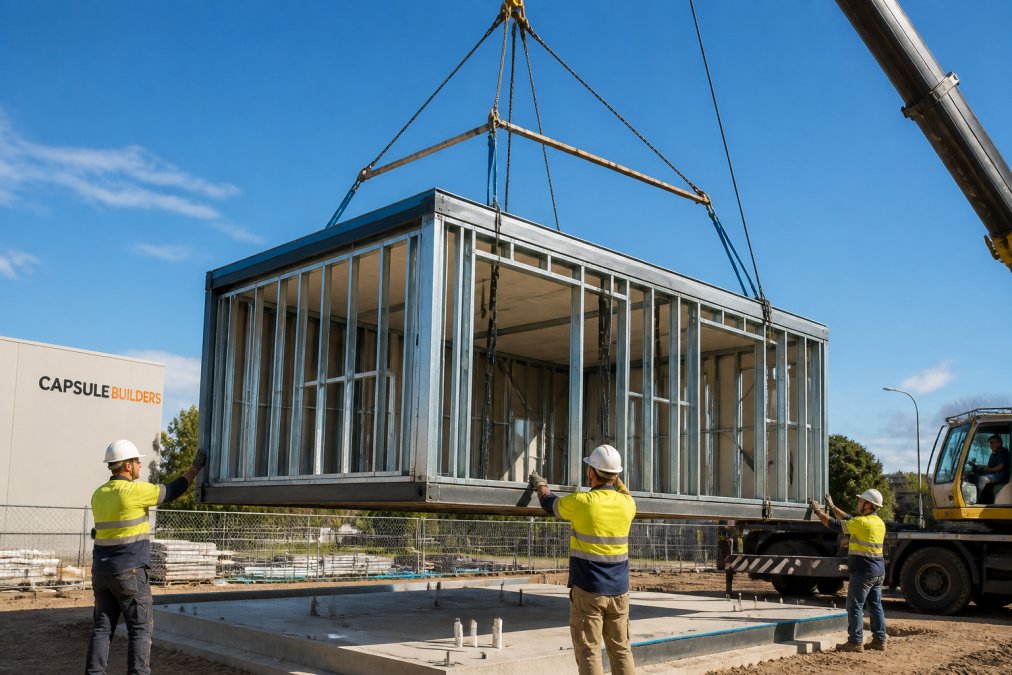
On a site-built job, surplus timber and offcuts go straight to skip. In a factory, every length is measured before cutting and leftovers get used on the next module.
The Australian Government's National Waste Report tracks how much construction and demolition waste the country generates each year. The direction of travel is clear: divert more, landfill less.
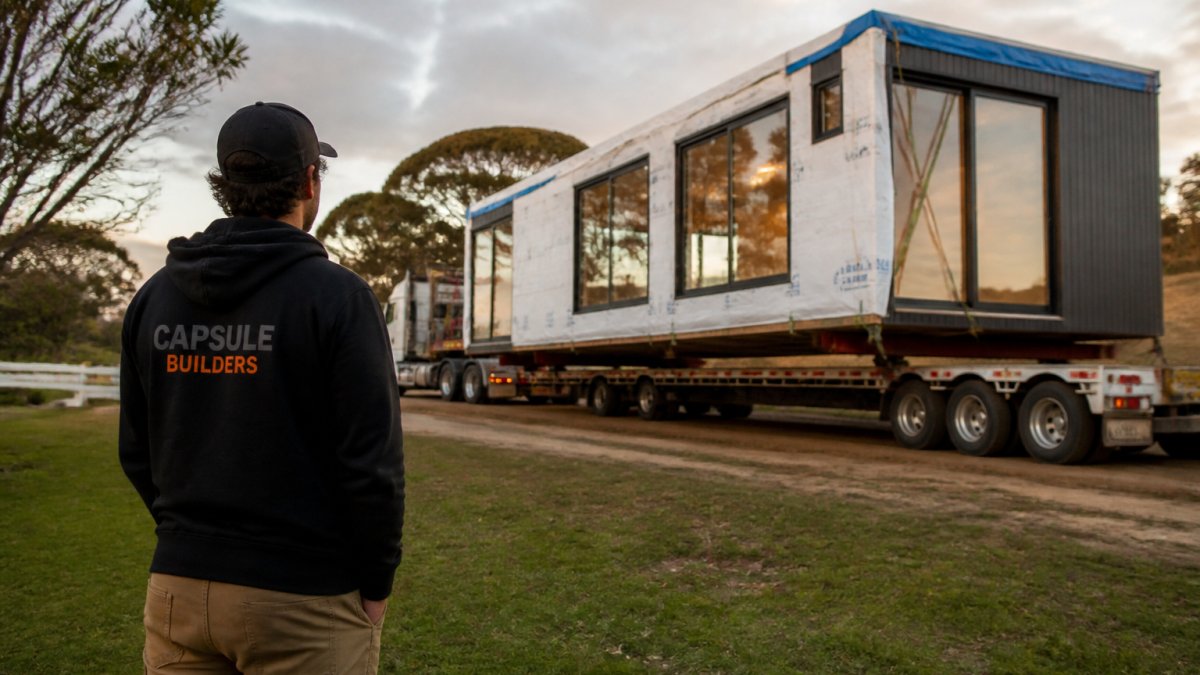
Modular units also mean fewer deliveries: one crane lift replaces dozens of truck movements, cutting transport emissions and site disruption together. As a complete modular builder including installation, Capsule Builders handles that lift and the final set-down, so the low-waste factory process carries through to a low-disruption site.
Energy Efficiency in Prefab Housing
Prefab housing tends to outperform site-built homes on energy efficiency, because the envelope is built to a repeatable standard, not to whatever the weather allows. Factory conditions mean insulation, sealing and glazing go in the same way every time, producing a tighter envelope with better thermal performance.
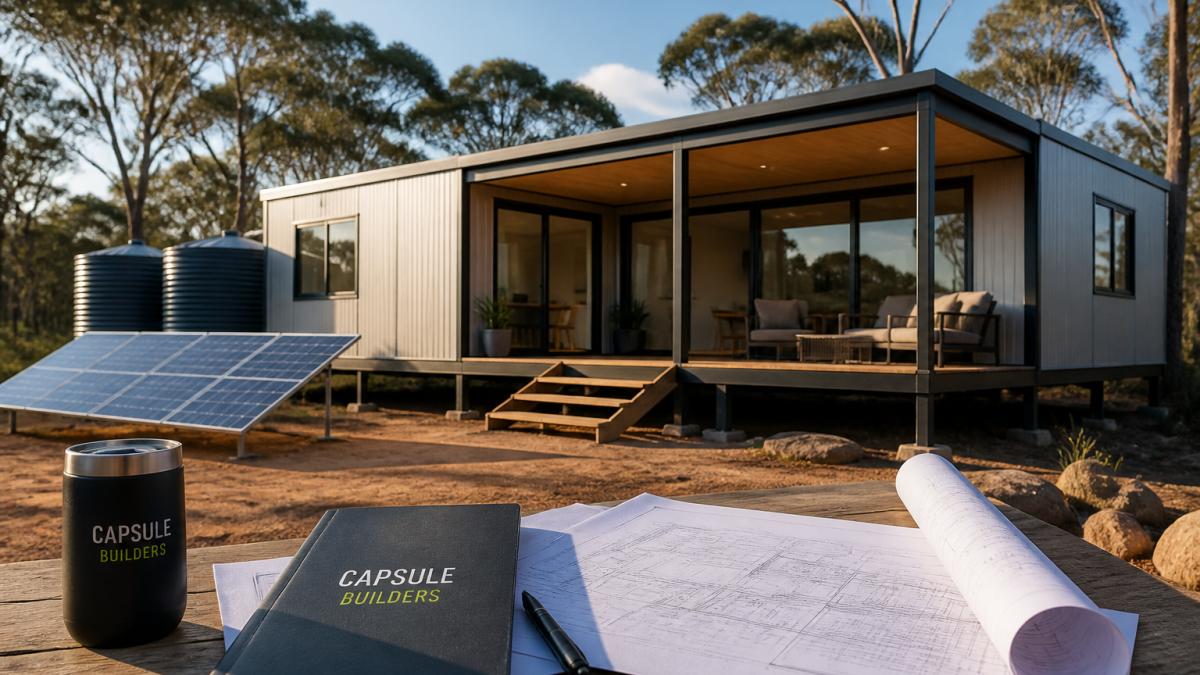
Energy efficiency is where long-term carbon savings live: a home needing less heating and cooling burns less power for decades, and solar and battery-ready wiring cuts running costs further.
The Australian Government's Your Home guide explains how orientation, glazing and insulation work together to cut household energy use. Modular design lets you lock those choices in before fabrication starts.
| Strategy | What It Cuts | Why It Works |
|---|---|---|
| Steel frame | Embodied carbon | Pre-cut, low-waste, recyclable |
| Off-site build | Construction waste | Factory reuse, fewer deliveries |
| Tight envelope | Operational emissions | Insulation sits without gaps |
| Solar and battery-ready | Grid reliance | Generate and store your own power |
That is where Capsule Studio™ earns its keep: you design the home and watch the budget update live, while an instant R-Code compliance review flags problems before steel is cut.
Want to see what your block can carry? Start your concept with Capsule Builders and build anything modular, from a compact retreat to a full family home.
Frequently Asked Questions
How does modular construction reduce construction waste?
Off-site manufacturing cuts waste by building in a controlled factory where materials are measured and cut precisely. Leftover steel, timber and insulation are collected for recycling rather than sent to landfill. Factory conditions also protect materials from weather damage, so fewer pieces are rejected. This approach supports waste diversion and lowers the carbon footprint of the build.
Are steel-framed modular homes more energy-efficient?
Steel-framed modular homes can achieve high thermal performance when designed with continuous insulation and airtight building envelopes. Off-site construction allows precise installation of insulation, reducing gaps that cause draughts. Many designs target a 7-star minimum energy rating and include solar and battery-ready options, which cut operational emissions over the life of the home.
Do modular homes meet the National Construction Code sustainability standards?
Yes. Modular homes must comply with the National Construction Code, including energy efficiency and sustainability provisions. Off-site manufacturing makes it easier to verify compliance because each module is inspected in a controlled environment. Working with an experienced modular builder ensures your home meets the required standards for thermal performance and environmental impact.