 how-to
Calculate Energy Savings for Modular Homes
Table of Contents
- What You'll Need Before Calculating Energy Savings
- How to Use a Home Energy Efficiency Calculator
- Assessing Modular Home Energy Efficiency and Comparing Designs
- Frequently Asked Questions
Last Updated: October 13, 2026
What You'll Need Before Calculating Energy Savings
Before calculating energy savings modular homes offer, gather your electricity bills, heating and cooling systems, and your home's orientation and shading.
Climate zone matters, Western Australia's heating and cooling demands vary from Perth to regional areas, and insulation, glazing and ventilation affect actual energy use.
Household size, routines, and solar or battery storage also shape your energy picture.
How to Use a Home Energy Efficiency Calculator
A home energy efficiency calculator estimates annual energy consumption and costs by combining your home's physical characteristics with your usage patterns.
Step 1: Enter your home's basic details
- Floor area, bedrooms and bathrooms
- Wall and roof insulation ratings (R-values)
- Window glazing and air sealing quality
Step 2: Input your heating and cooling systems
- Heating and cooling method and efficiency rating
- Hot water system type
- Solar or battery storage plans
Step 3: Add your location and climate data
- Your suburb or postcode in Western Australia
- Average outdoor temperatures
- Orientation and shading
Step 4: Set your usage assumptions
- Occupants and daily routines
- Temperature preferences and hot water usage
- Lighting and appliance usage
Step 5: Review your energy rating results The calculator shows estimated annual energy consumption in kilowatt-hours, projects electricity costs, and often provides a star rating.
Assessing Modular Home Energy Efficiency and Comparing Designs
Assessing energy efficiency for a modular home means looking at how well the building shell performs and how efficiently your systems operate.
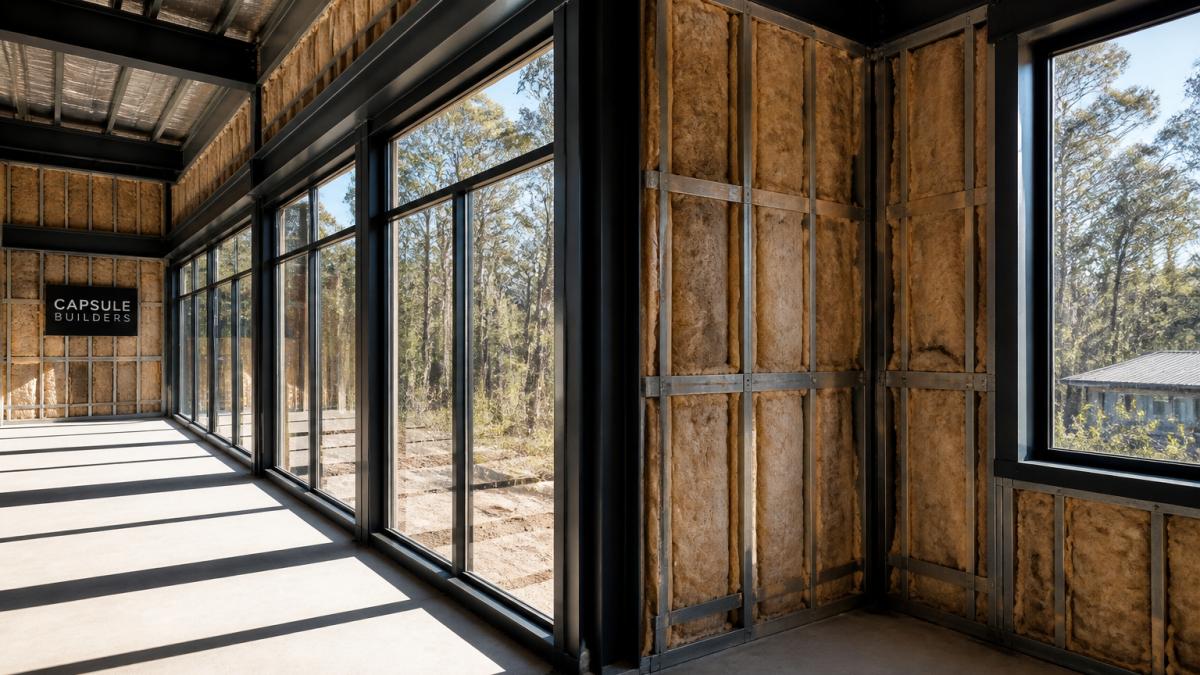
Better insulation reduces heating and cooling demand, double or triple glazing outperforms single, air sealing stops draughts, and external shading cuts summer heat gain.
When comparing modular home designs, look at the thermal shell first, insulation ratings, window performance, orientation and shading drive most energy consumption.
Then evaluate systems: an efficient heat pump beats electric heating, solar cuts grid demand, battery storage lets you use solar after dark, and a heat pump hot water system beats electric resistance.
Use your calculator results to compare scenarios, run your preferred design, then try triple glazing or solar to see which upgrades deliver the best return. As an experienced modular builder, we specialise in custom modular builds that prioritise energy efficiency, with a 7-star minimum design target so your modular home performs well from the start. Our complete modular builder including installation service means you can move from design concept through to a finished, energy-efficient home.
Calculating energy savings modular homes deliver gives you clarity on what your home will actually cost to run. We help you design modular homes that balance upfront investment with long-term savings. Start your concept with our Capsule Studio™ tool to see real-time budget and energy performance estimates, and get in touch to explore how a custom modular home can deliver the comfort and efficiency you're after.
Frequently Asked Questions
What information do I need to calculate energy savings for a modular home?
You'll need your home's design specifications: insulation values (R-values), window type and orientation, heating and cooling system details, local climate zone data, and your current or projected electricity tariff. For modular homes, also note any solar or battery-ready features built into the design. Your home energy efficiency calculator will guide you through entering these details step by step.
How does a home energy rating affect calculating energy savings?
Your home energy rating (typically expressed in stars) directly reflects your home's thermal performance and energy demand. A higher-rated design uses less energy for heating and cooling. When comparing two modular home designs, the energy rating provides a standardised measure of efficiency. Use this rating as a baseline to calculate annual energy consumption and project utility bill reductions against your current or conventional home baseline.
Can I use a whole-of-home energy calculator to compare modular versus traditional builds?
Yes. A whole-of-home energy calculator assesses all energy-consuming systems together: heating, cooling, hot water, appliances, and lighting. For modular homes, this approach reveals how factory-built precision in insulation, air sealing, and thermal shell design compounds savings. Enter specifications for both designs to see the total annual energy consumption difference and estimate long-term utility bill reductions.